Lowest-PriceFree ShippingExtra SavingsExtra Savings with Champ+ MembershipLearn More

Summer Sale! UP TO 95% OFF CANVAS PRINTS + FREE SHIPPING OVER $69! (CODE: SHIPFREE69) | VIEW DETAILS

    Ends In
  • 00
    :
  • 00
    :
  • 00
    :
  • 00
See Your Photo Preview Upload Photo
Live Chat

Canvas Prints for Wall Décor:
A Detailed Guide

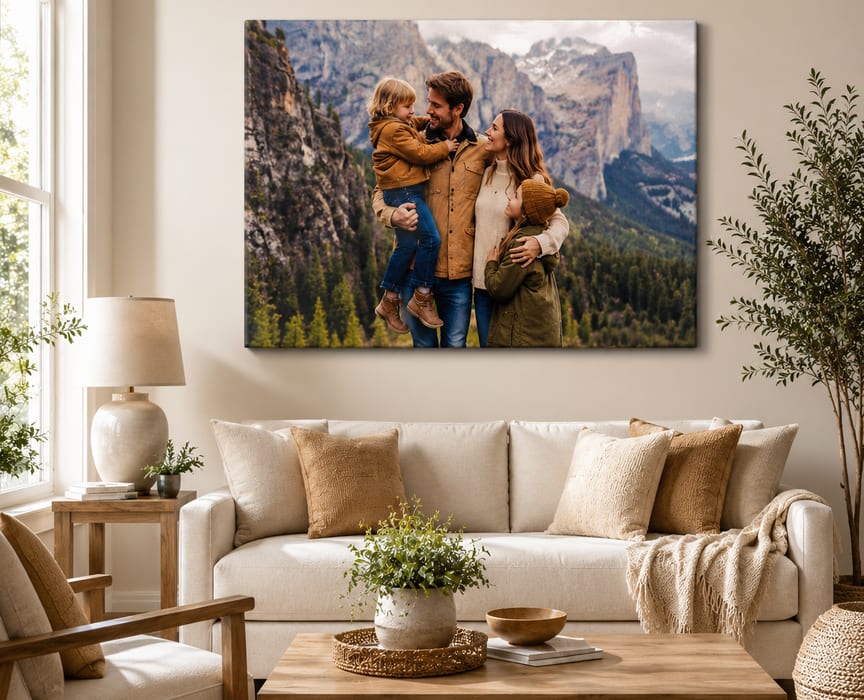
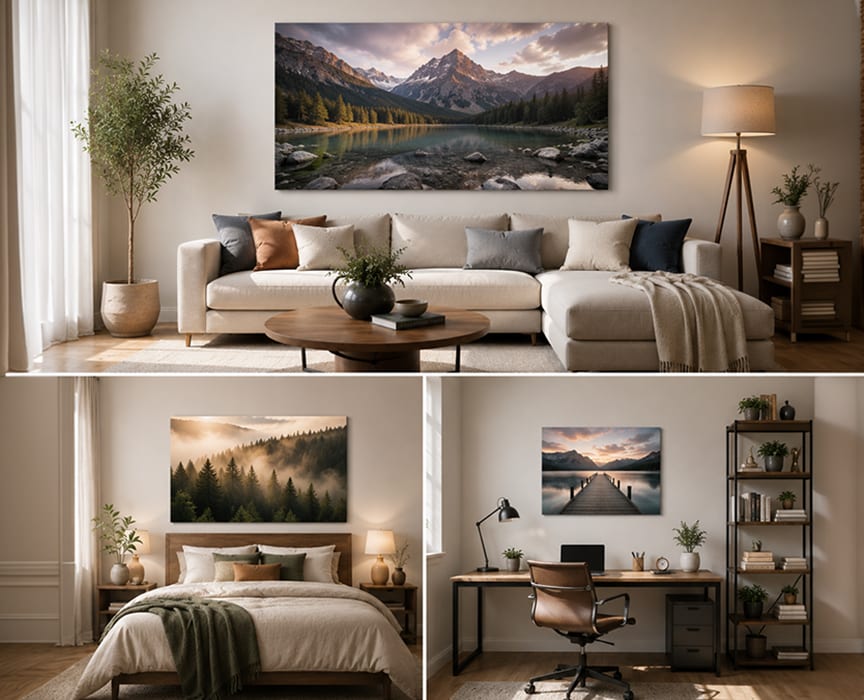
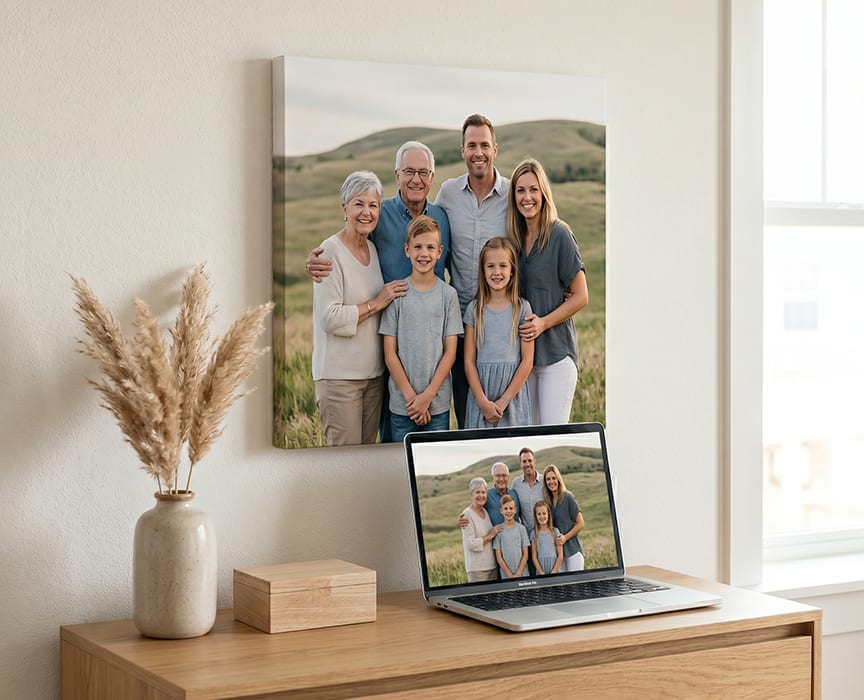
Canvas prints are one of the easiest ways to turn personal photos, artwork, travel memories, and family portraits into beautiful wall decor. They feel warm, personal, and stylish without needing too much effort. A single canvas can brighten an empty wall, while a large canvas print or collage can become the main focus of a room.

But choosing the right canvas print is not just about uploading a photo and picking a size. The final result depends on many small decisions. You need to choose the right photo quality, canvas size, edge style, layout, hanging method, and care routine. Even details like lighting, cropping, wall space, and furniture placement can change how your canvas looks once it arrives.

This guide brings all those important points together in one place. You will learn how canvas prints compare with framed prints, which canvas wrap style suits your photo, when to choose split canvas prints, how to select the right size for your wall, and how to prepare your image before printing. You will also find ideas for canvas collages, tips for hanging your canvas properly, ways to clean and maintain it, and advice for using large canvas prints as statement wall art.

Whether you are decorating a living room, bedroom, hallway, office, or gifting a custom canvas print to someone special, this guide will help you make better choices from start to finish. By the end, you will know how to turn your favorite photos into canvas pictures that look balanced, sharp, and ready to display.

Canvas Vs. Framed Prints: Which to Choose?

Choosing between canvas prints and framed prints can feel confusing when both can make your photos look beautiful. The best choice depends on your room, photo style, budget, and the kind of finish you want. Canvas prints feel relaxed and artistic, while framed prints bring a neat, classic look. Here are a few easy ways to decide which one fits your space better.

1. Choose Canvas Prints for a Soft, Modern Look

Choose Canvas Prints for a Soft, Modern Look

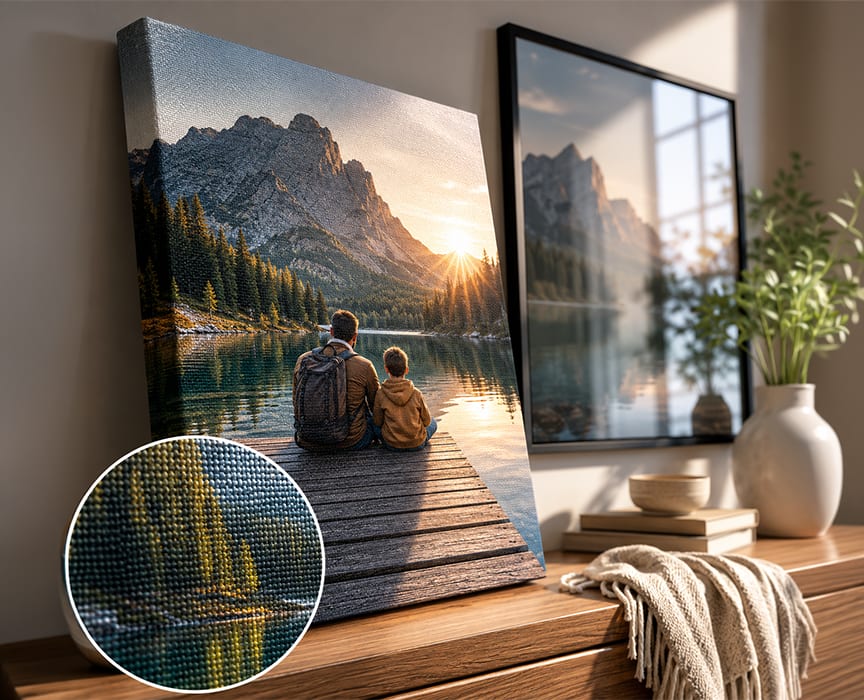
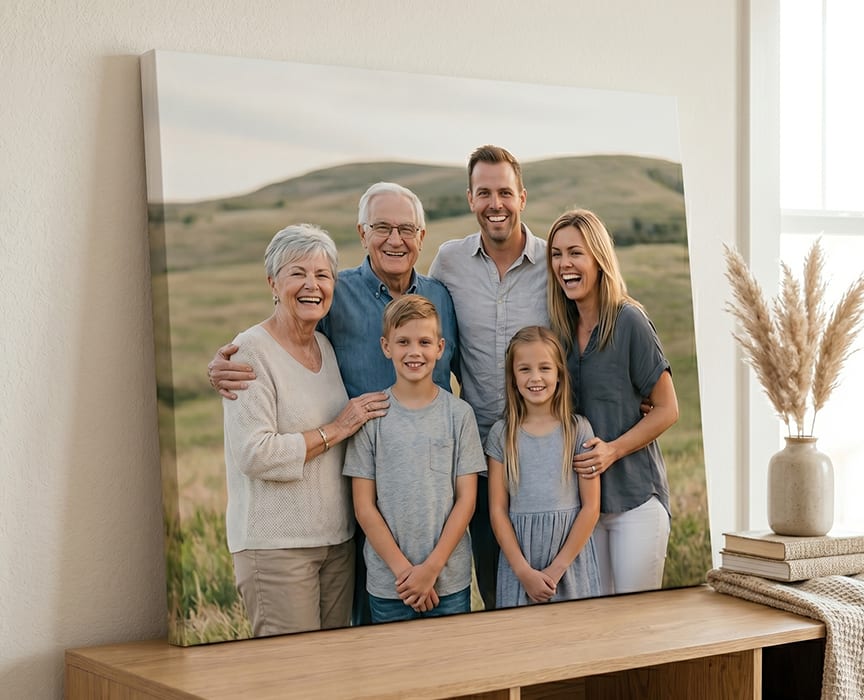
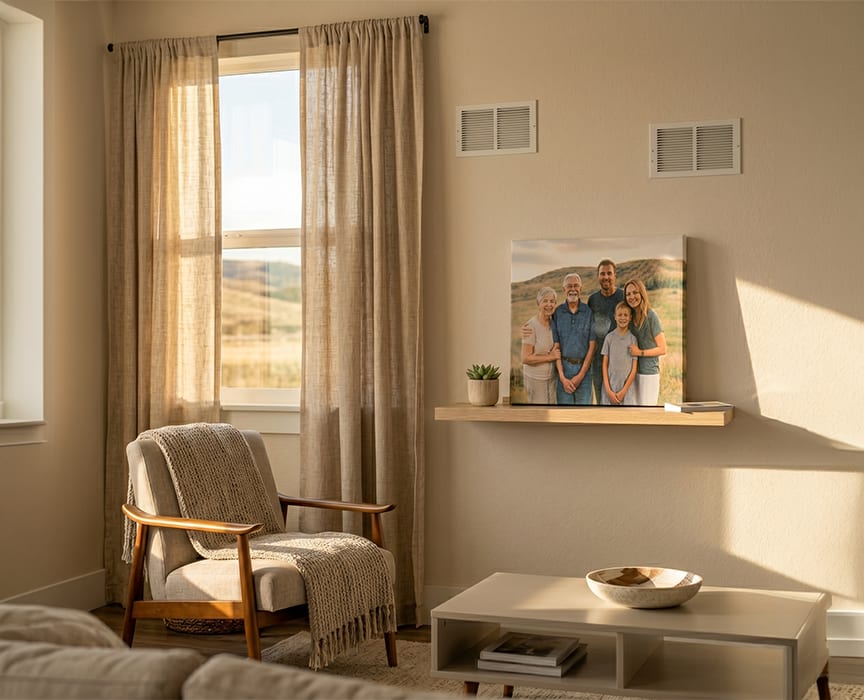
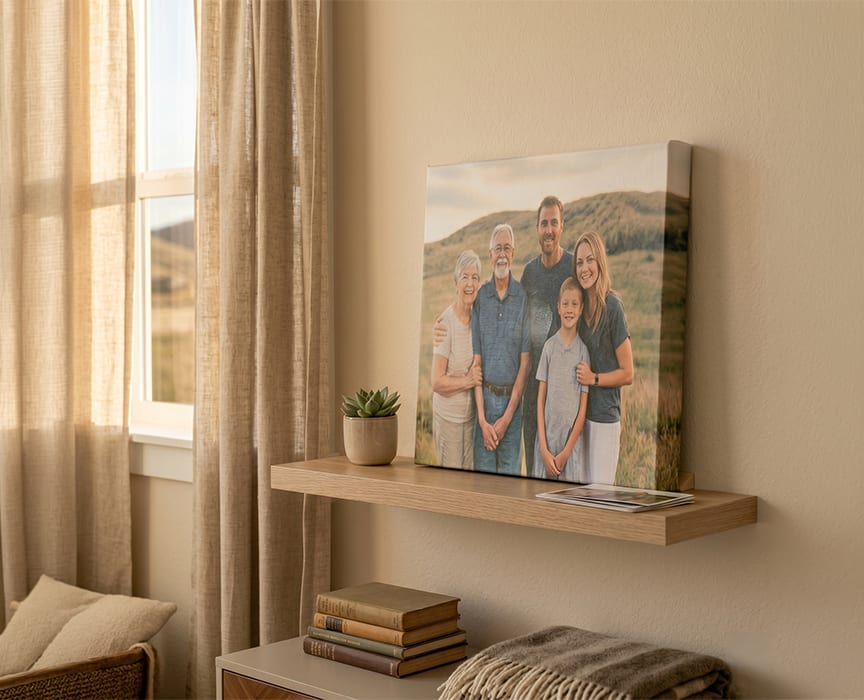
Canvas prints are made by printing your photo directly on canvas fabric and stretching it over a wooden frame. They usually come ready to hang and do not need glass or an outer frame.

This makes them a great choice for modern homes, bedrooms, living rooms, and casual spaces. The textured surface gives photos a warmer look, especially family portraits, travel pictures, wedding photos, and scenic shots.

2. Pick Framed Prints for a Polished Finish

Pick Framed Prints for a Polished Finish

Framed prints are usually printed on photo paper and placed inside a frame with glass or acrylic protection. The frame adds structure and can make the photo feel more formal.

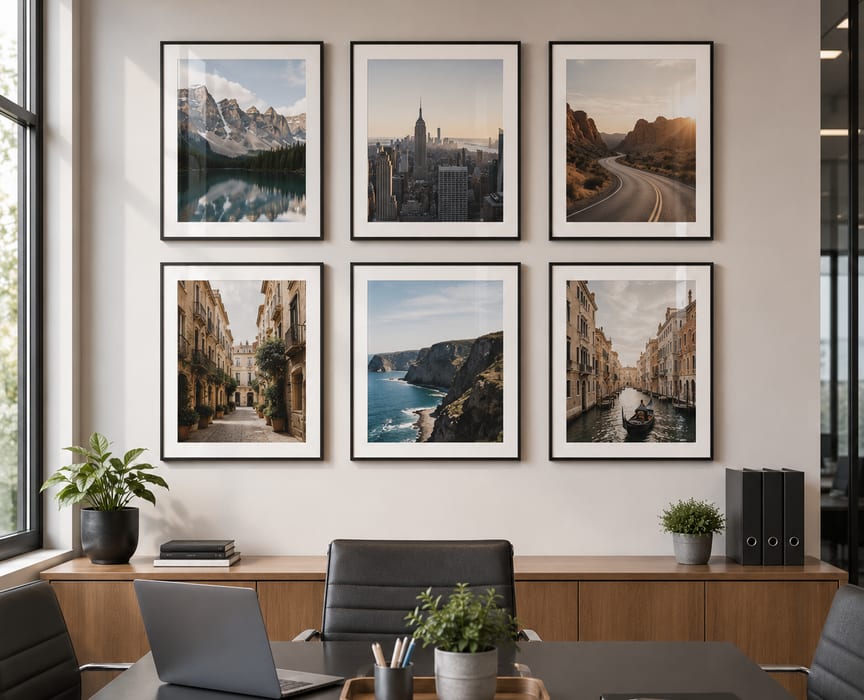
They work well in offices, hallways, study rooms, galleries, and spaces where you want a clean, finished display. Framed prints are also a good option for artwork, certificates, typography, and detailed images.

3. Think About Glare and Texture

Think About Glare and Texture

Canvas prints do not have glass, so they reduce glare and reflections. This makes them easier to view in bright rooms or near windows. Their matte texture gives photos a painted feel.

Framed prints can show sharper details, but the glass may reflect light. If your room has strong lighting, choose non-glare glass or place the frame away from direct sunlight.

4. Compare Weight and Hanging Needs

Compare Weight and Hanging Needs

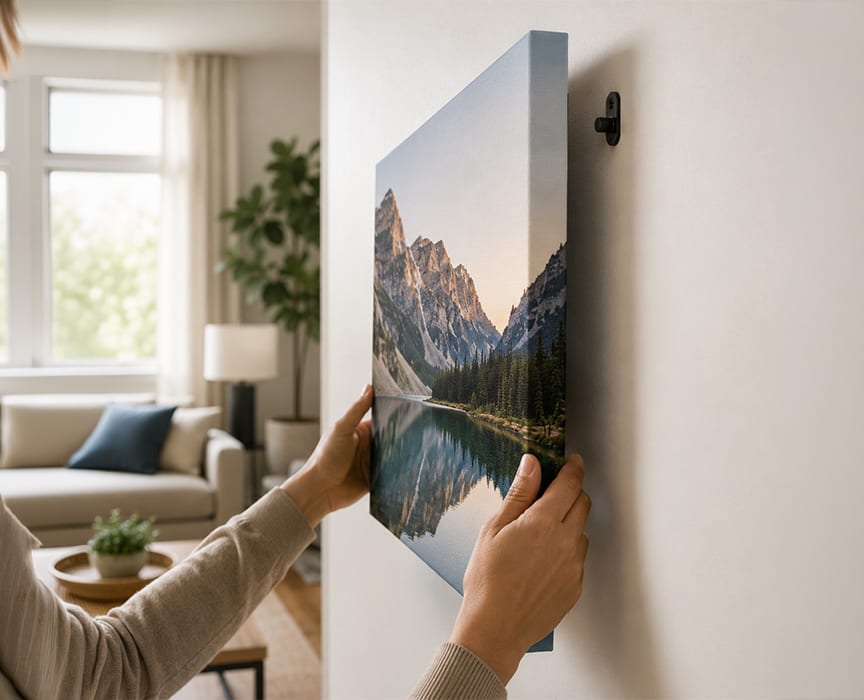
Canvas prints are lightweight and simple to hang, even in larger sizes. This makes them useful for big feature walls or gallery-style layouts.

Framed prints are often heavier, especially when they include glass. Larger framed pieces may need stronger hooks, anchors, or wall support. If you want a quick and easy setup, canvas prints are usually simpler.

5. Look at Maintenance and Durability

Look at Maintenance and Durability

Canvas prints are easy to clean with a soft, dry cloth. Since there is no glass, you do not need to worry about fingerprints or reflections.

Framed prints offer added protection because the photo is protected by glass or acrylic. This helps guard against dust and moisture, but the surface needs regular cleaning.

6. Match the Print to Your Room Style

Match the Print to Your Room Style

For cozy, creative, or minimal spaces, canvas photo prints are a strong choice. They blend easily with home decor and work well as large wall art.

For formal rooms, office walls, or classic interiors, framed prints may look better. You can also mix both styles by using a large canvas as the main piece and adding smaller framed prints around it.

The right choice between canvas prints and framed prints comes down to the feeling you want in the room. Choose canvas prints for a warm and artistic display. Choose framed prints for a sharp, structured, and timeless look. Plan the look you’re opting for, and then get your canvas prints ready.

Split Canvas Prints: When To Use Multi-Panel Art?

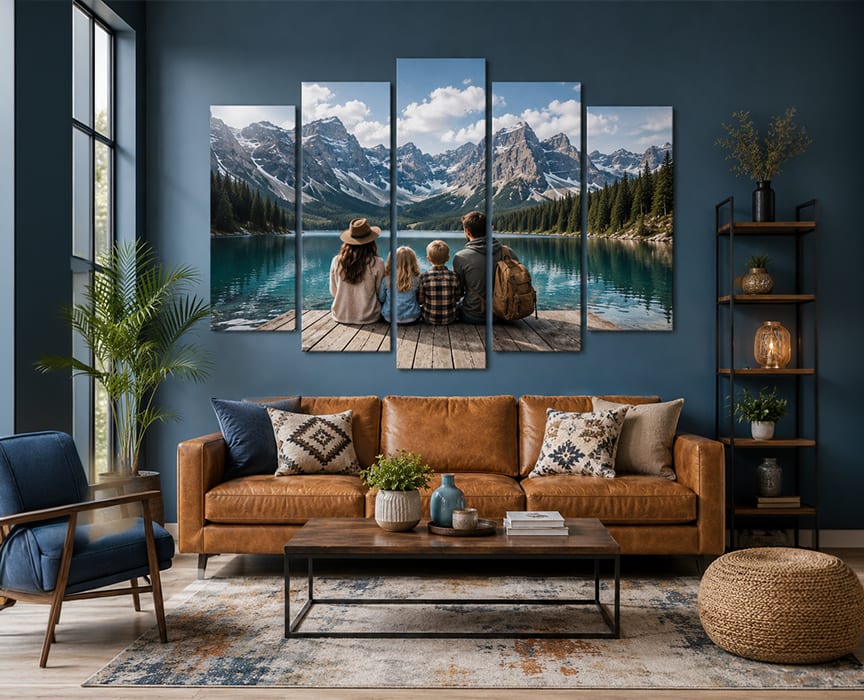
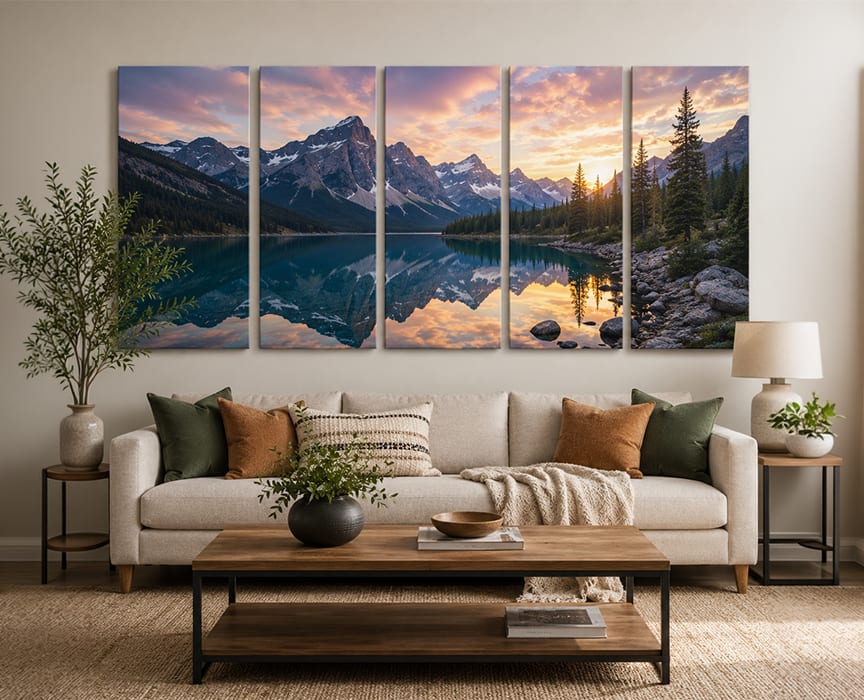
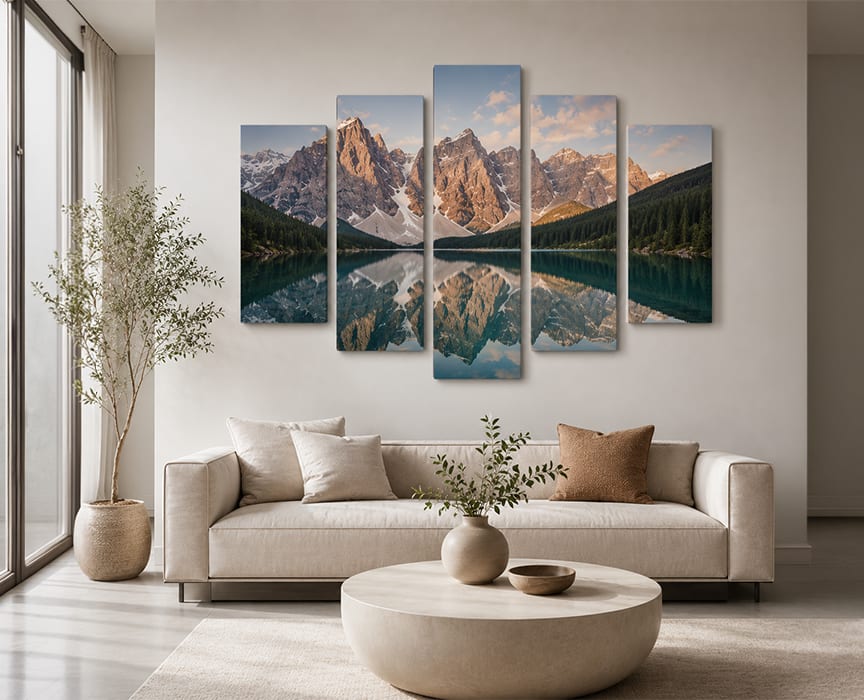
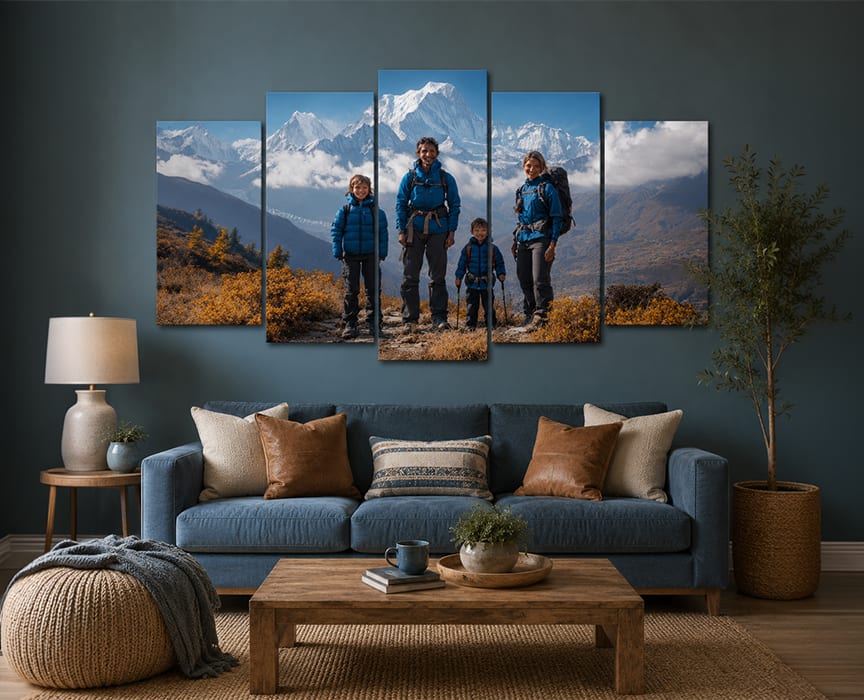
A split canvas print takes one image and spreads it across multiple canvas panels. Instead of displaying a single flat photo, you get a wider and more eye-catching wall display. It is a simple way to turn one favorite memory, landscape, or artwork into a strong decor piece without making the wall look too busy.

1. They Turn One Image into Statement Wall Art

They Turn One Image into Statement Wall Art

Split canvas prints are great when you want one photo to become the main focus of a room. A single image divided across two, three, five, or more panels instantly feels larger and more artistic.

This works especially well for living rooms, bedrooms, offices, hallways, and dining areas. One good photo can fill a wide wall without needing several different pictures.

2. They Work Best with Wide and Scenic Photos

They Work Best with Wide and Scenic Photos

Not every photo is right for a split canvas. Wide images usually work best because they have enough space to stretch across multiple panels. Think beach views, city skylines, mountain scenes, wedding portraits, family photos, or travel shots.

Photos with the main subject in the center can also work well, as long as important details do not get cut between panels.

3. They Add Depth Without Extra Clutter

They Add Depth Without Extra Clutter

A split canvas gives your wall more movement than a regular single canvas print. The small gaps between panels create depth and make the image feel more interesting.

This is a good choice when you want bold wall decor but do not want to add shelves, frames, or too many small pieces. It keeps the look clean while still making the wall stand out.

4. They Give You Flexible Layout Options

They Give You Flexible Layout Options

Split canvas prints come in many layouts. You can choose a simple two-panel design, a balanced three-panel layout, or a larger multi-panel style for a dramatic look.

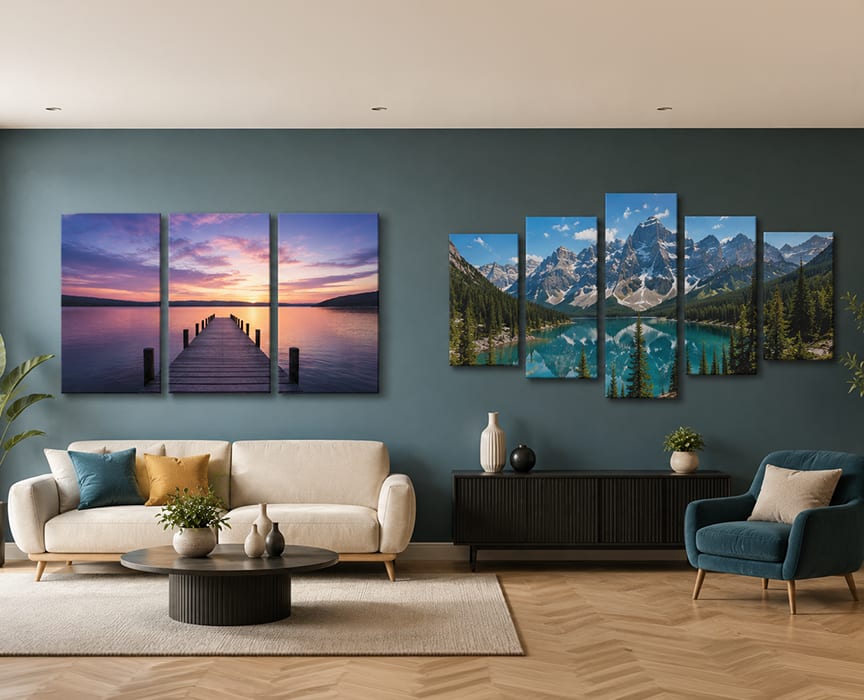
Straight layouts are easy to place above sofas, beds, and console tables. Staggered panel designs feel more creative and suit large open walls. The right layout depends on your wall size and the shape of your image.

5. They Make Personalized Decor Feel More Special

They Make Personalized Decor Feel More Special

A split canvas print can turn a personal photo into artwork. Family memories, travel pictures, wedding moments, pet photos, and nature shots all feel more special when displayed across multiple panels.

However, split canvas prints are not ideal for every single photo. Before ordering, check the image quality and preview the panel breaks. Make sure faces, text, or key details do not fall directly into the gaps. With the right photo and layout, split canvas prints can give one image a much bigger payoff.

How To Choose the Right Canvas Size for Your Wall

Choosing the right canvas size can change the way your wall looks. A small print may feel lost on a large wall. A very large one may make the room feel crowded. The right size gives your space balance, warmth, and a finished look. Here are a few simple tips to help you pick the best canvas print size for your home.

1. Start with Standard Canvas Sizes

Start with Standard Canvas Sizes

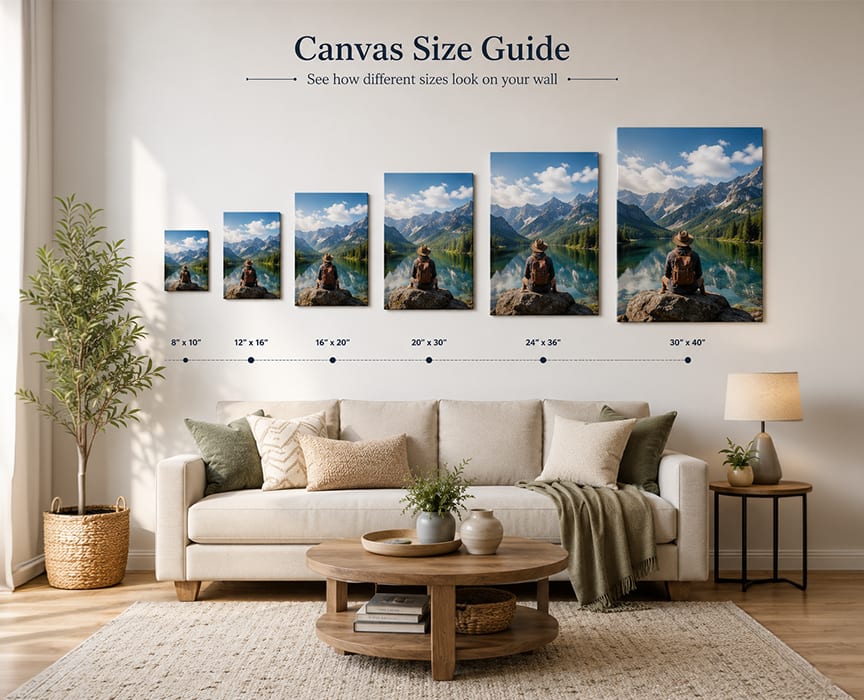
Before choosing a design, understand the most common canvas sizes. Small sizes like 8x10 and 10x12 work well for desks, shelves, and narrow walls. Medium sizes such as 12x18 and 16x20 are great for bedrooms, offices, and smaller living room walls. Large sizes like 20x30 and 24x36 make a stronger statement above furniture. Oversized options such as 30x40 or 40x60 are best for big empty walls.

2. Follow the 60 to 75 Percent Rule

Follow the 60 to 75 Percent Rule

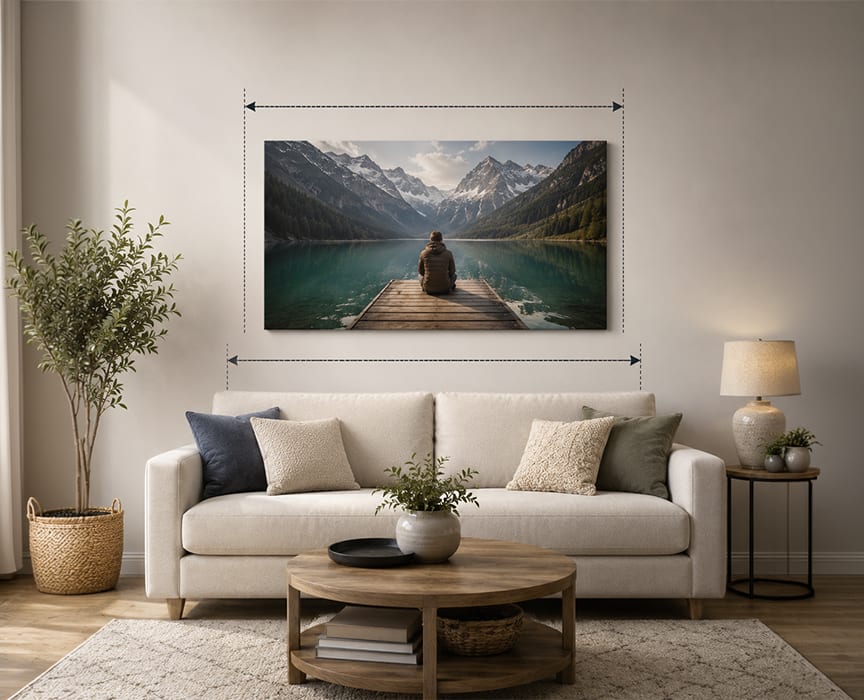
A simple way to choose the right size is to measure your wall width. Your canvas should cover around 60 to 75 percent of that space. This keeps the artwork from looking too small or too heavy. For example, if your wall is 60 inches wide, a canvas around 36 to 45 inches wide can look balanced.

3. Match the Canvas with Your Furniture

Match the Canvas with Your Furniture

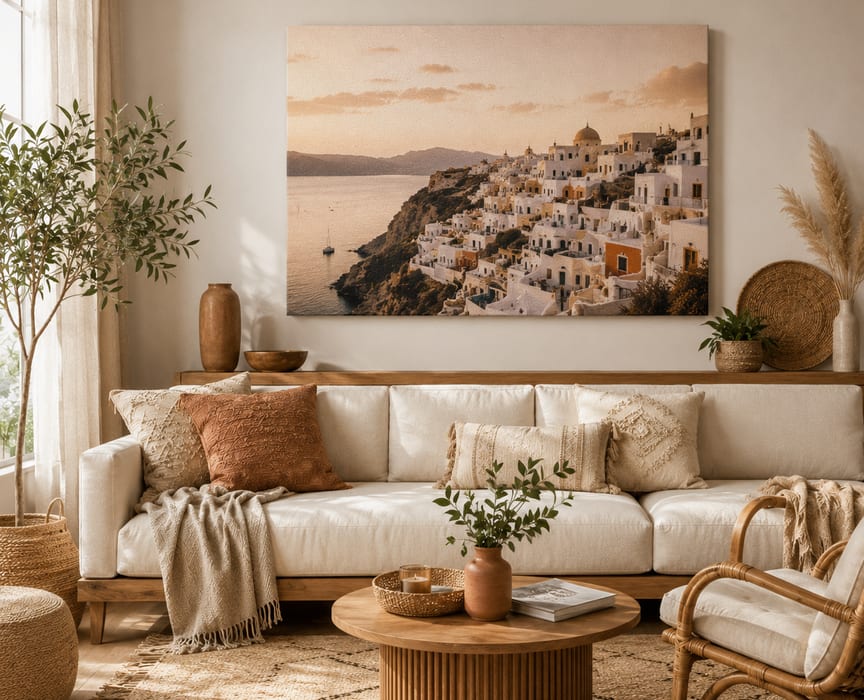
When hanging canvas prints above a sofa, bed, console table, or dining bench, use the furniture as your guide. The artwork should usually be about two-thirds the width of the furniture below it. It should not be wider than the furniture, as that can make the layout feel uneven. Leave about 6 to 12 inches between the top of the furniture and the bottom of the canvas.

4. Pick the Right Size for Each Room

Pick the Right Size for Each Room

Different rooms need different canvas sizes. Living rooms usually look better with large canvas prints or multi-panel designs because they create a strong focal point. Bedrooms work well with medium to large prints placed above the bed. Dining areas and home offices often need moderate sizes that add style without becoming distracting.

5. Choose Between One Large Print and a Gallery Wall

Choose Between One Large Print and a Gallery Wall

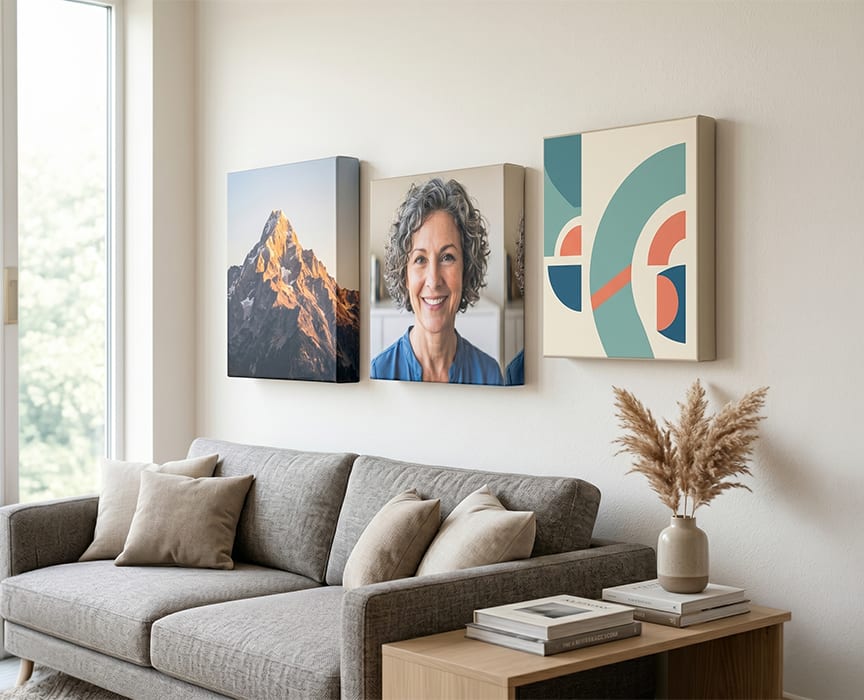
A single large canvas gives a clean and modern look. It works well when you want one photo or artwork to stand out. A gallery wall is better when you want to display many memories together. You can mix different sizes, but keep the spacing even so the wall looks neat. Multi-panel canvas prints are another good option for wide walls.

6. Check Orientation and Hanging Height

Check Orientation and Hanging Height

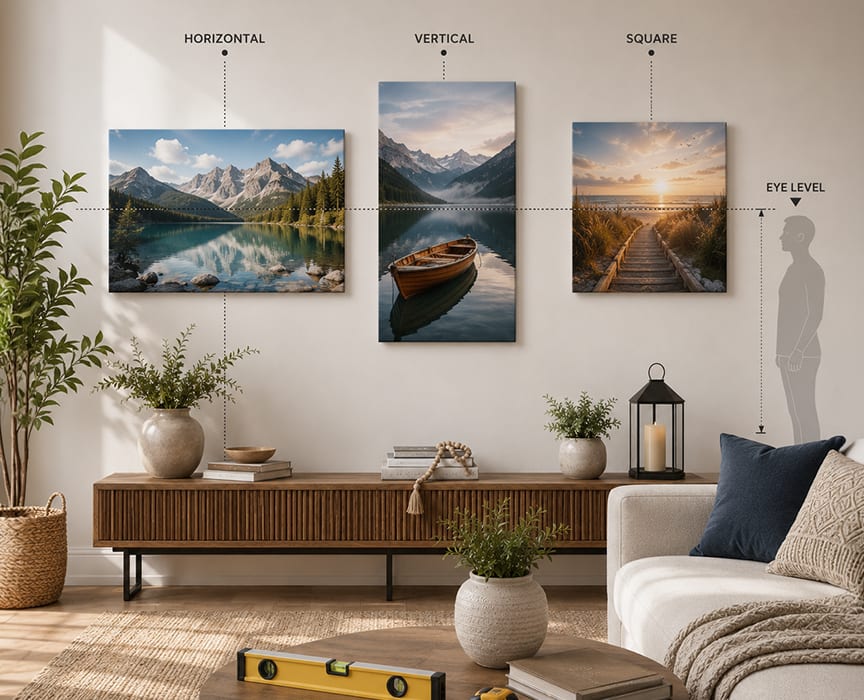
Canvas orientation matters too. Horizontal prints are best above sofas, beds, and dining tables. Vertical prints suit hallways, entryways, and narrow wall spaces. Square prints create a neat, balanced look. For hanging height, place the center of the canvas around eye level, usually 57 to 60 inches from the floor.

Canvas sizes impact the overall look of your walls more than you might know. Before ordering, use a painter’s tape to mark the canvas size on your wall. Step back and check how it looks from different angles. This small step can help you avoid sizing mistakes and choose a canvas print that fits your wall beautifully.

Best Photos for Canvas Prints

A beautiful canvas print starts with the right photo. Even a meaningful picture can look blurry, dark, or poorly framed if it is not suitable for printing. Before you upload your image, check a few simple things so your canvas photo prints look sharp, balanced, and ready for your wall.
1. Choose a High-Resolution Photo

Choose a High-Resolution Photo

Resolution decides how clear your photo on canvas will look after printing. A photo that looks fine on your phone may not stay sharp when enlarged. For best results, use the original image from your camera or phone instead of a screenshot, social media download, or compressed file.

As a general rule, mini canvas prints can work with medium-quality images, but large canvas prints need higher resolution. Zoom in to 100 percent before ordering. If the image looks blurry on screen, it will likely look soft on canvas too.

2. Keep the Subject Clear and Well-Framed

Keep the Subject Clear and Well-Framed

The best photos for canvas prints usually have one clear subject. It could be a person, pet, family moment, travel scene, or piece of artwork. Busy backgrounds or too many small details can make the final print feel crowded.

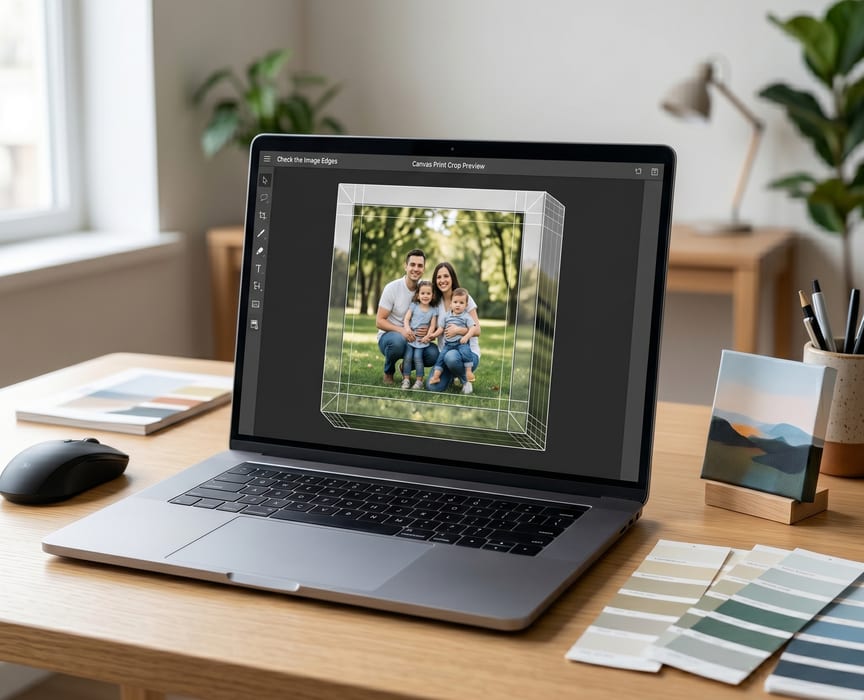
Also check the edges of your photo. Canvas prints wrap around a frame, so faces, text, hands, or important objects should not sit too close to the border. Leave enough space around the subject for a cleaner final result.

3. Pick Photos with Good Lighting and Color

Pick Photos with Good Lighting and Color

Lighting can make or break a canvas print. Natural light often gives softer and more realistic results. Dark, grainy, overexposed, or heavily filtered photos may not print well.

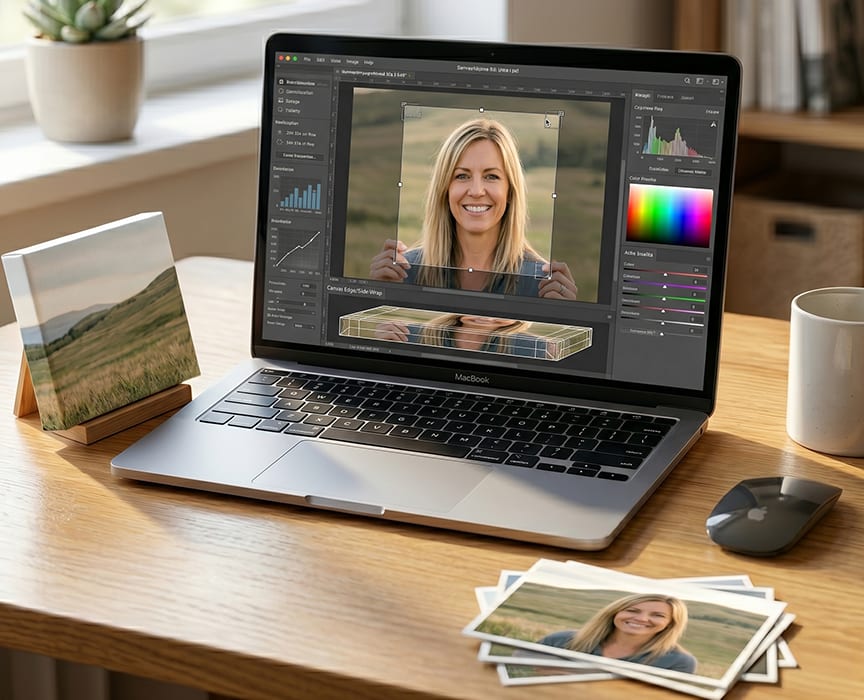
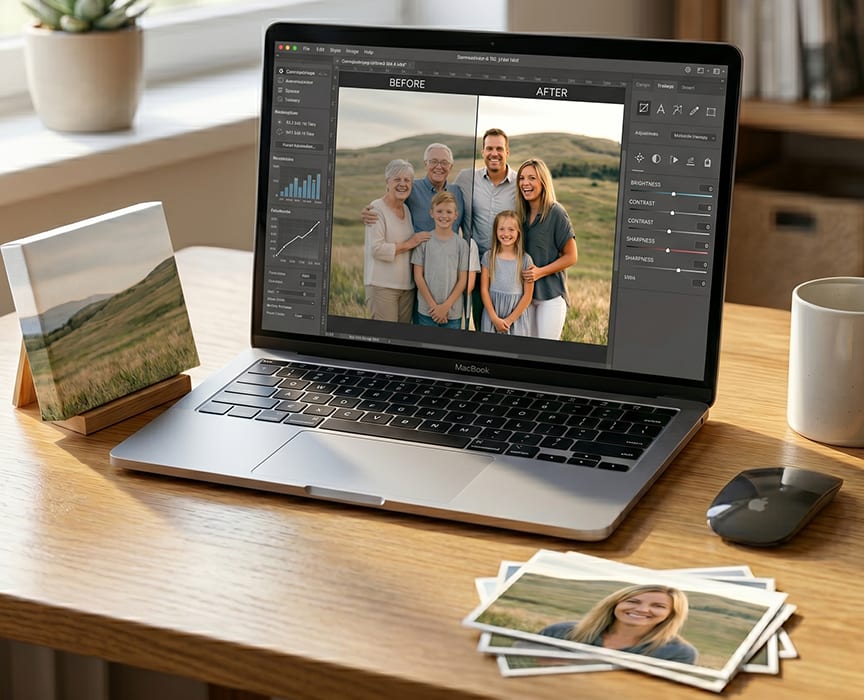
Bright colors, soft tones, black-and-white portraits, landscape photos, and travel images often look great on canvas. Before uploading, you can make small edits like adjusting brightness, contrast, sharpness, or cropping. Keep edits light so the photo still looks natural.

4. Match the Photo with the Canvas Size and Shape

Match the Photo with the Canvas Size and Shape

Not every photo suits every canvas size. A vertical portrait works well for narrow walls, hallways, or personal portraits. Horizontal photos are better for landscapes, family group shots, and wide wall spaces. Square photos are great for social media-style images or gallery walls.

If your image quality is limited, choose a smaller canvas instead of stretching it too large. The best photos that reflect nicely on canvas, with the right size and shape, help your custom canvas prints look clear, balanced, and worth displaying.

How To Prepare Your Photo for Canvas Printing

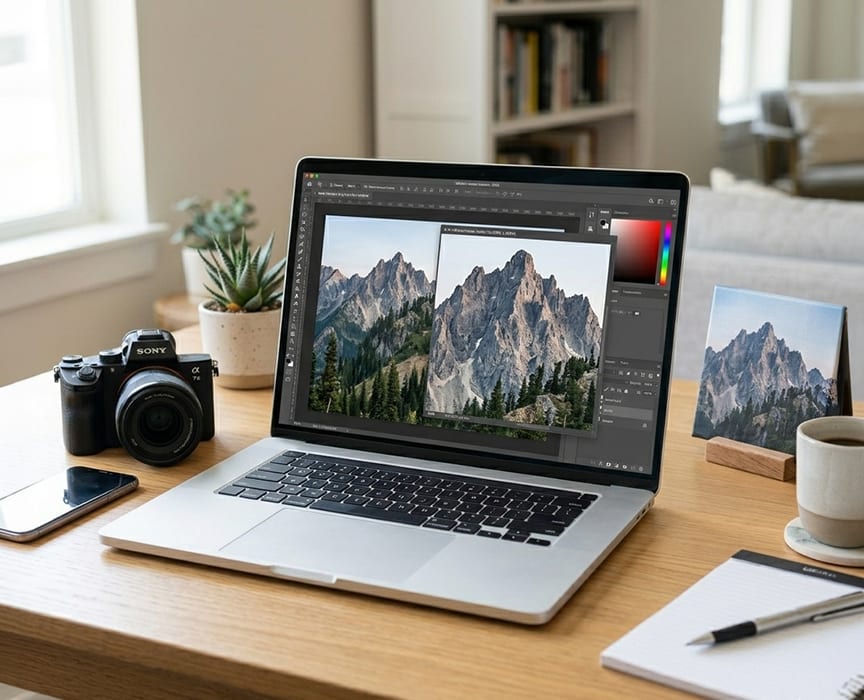
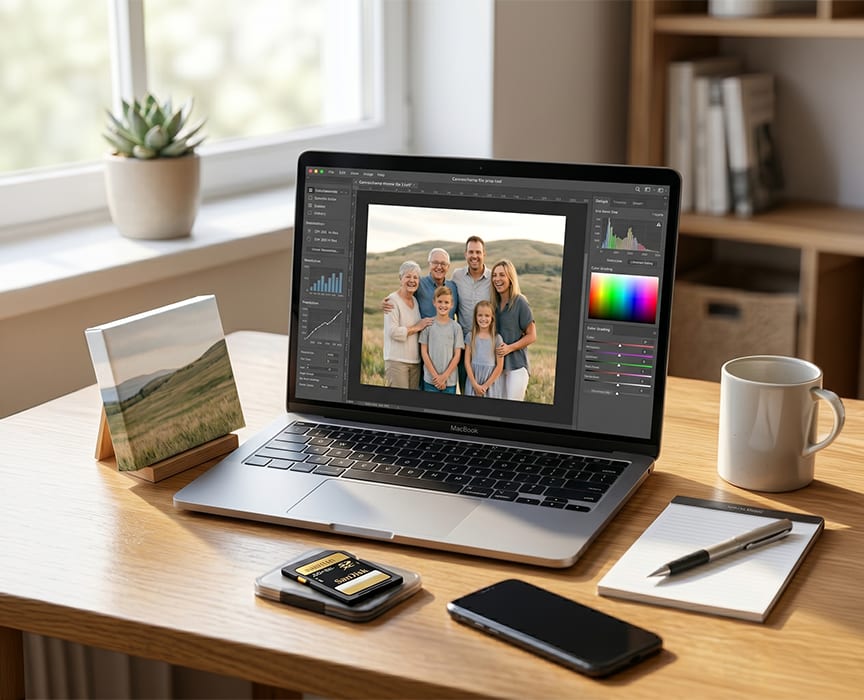
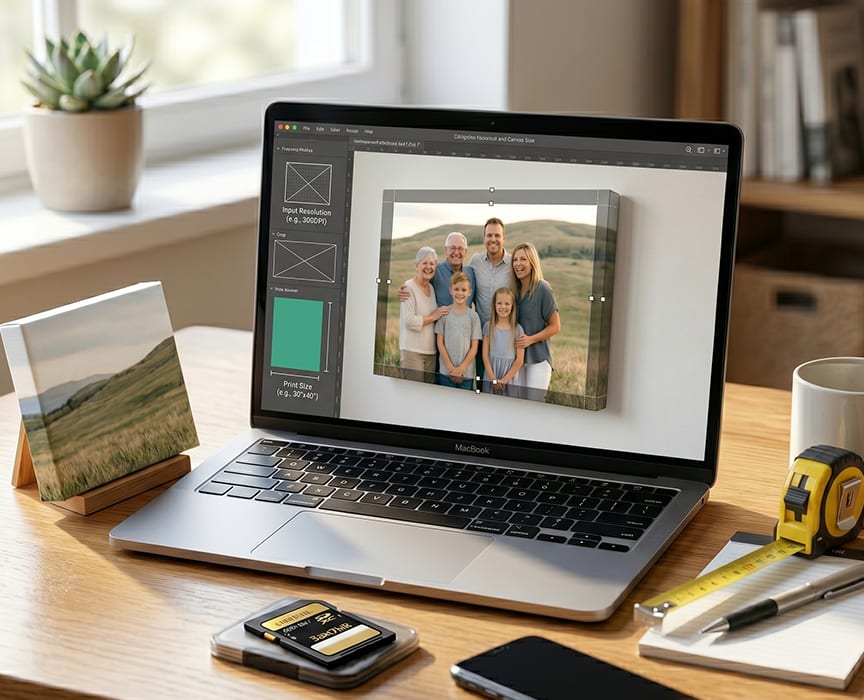
A great canvas print starts before you place the order. The photo you upload decides how sharp, bright, and balanced the final print will look. A few small checks can help you avoid blurry details, awkward cropping, or dull colors.

1. Start with the Best Quality File

Start with the Best Quality File

Use the original photo whenever possible. Avoid screenshots, social media downloads, WhatsApp images, or heavily compressed files because they often lose detail. For canvas photo prints, a high-resolution JPEG or PNG usually gives better results.

If you want a large canvas, the image needs to be clearer and larger too. A photo that looks fine on your phone may not stay sharp when stretched across a big wall print.

2. Match the Photo to the Canvas Size

Match the Photo to the Canvas Size

Before choosing your canvas size, check whether your image can handle that enlargement. Small images can look pixelated when printed too large.

If your photo quality is limited, choose a smaller canvas print instead of forcing it into a large format. For living rooms, feature walls, or oversized canvas pictures, always use the highest-resolution version available.

3. Crop Without Losing Important Details

Crop Without Losing Important Details

Cropping helps your photo fit the canvas shape, but it should be done carefully. Keep the main subject balanced and remove distracting background areas where needed.

Also leave some space around faces, text, hands, pets, or important objects. Canvas prints wrap around the wooden frame, so anything too close to the edge may bend onto the sides or get trimmed from the front view.

4. Adjust Brightness, Contrast, and Sharpness

Adjust Brightness, Contrast, and Sharpness

Canvas has a matte texture, so printed photos can sometimes appear slightly darker than they look on screen. Lightly increase brightness and contrast if the image feels dull.

You can also sharpen the photo a little, especially for larger custom canvas prints. Do not over-edit, though. Too much sharpness, saturation, or filtering can make the final print look harsh or unnatural.

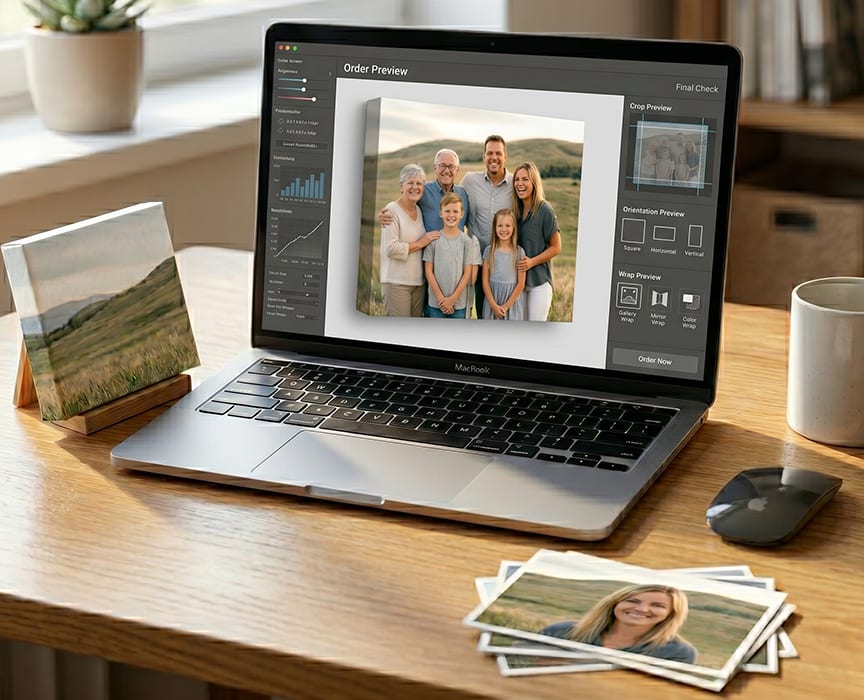
5. Preview Everything Before Ordering

Preview Everything Before Ordering

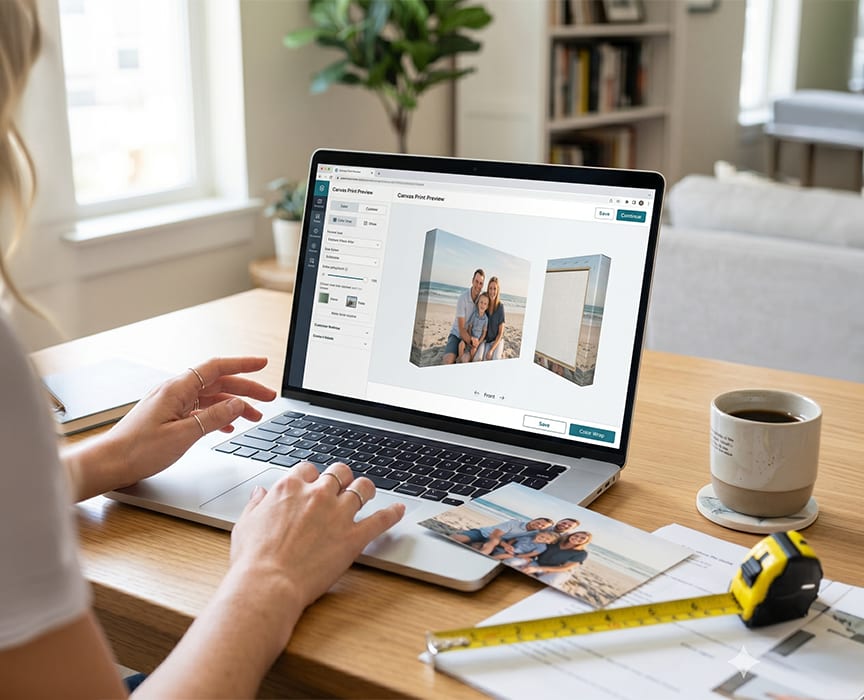
The preview step is there for a reason. Check the alignment, crop, orientation, wrap style, and overall image placement before you confirm the order.

Vertical photos work well for portraits, horizontal images suit landscapes and group shots, and square photos look neat in gallery walls. Preparing your photo before sending it for printing will result in better quality canvas prints. One final review can help your photo on canvas look clean, clear, and ready to display.

Canvas Collage Ideas — 5 Stunning Layouts

A canvas collage is a great way to display more than one memory without making your wall feel crowded. Instead of using one large print, you can arrange several canvas prints together to tell a story. The best layout depends on your wall size, photo style, and the room where you plan to hang it.

1. Classic Grid Layout

Classic Grid Layout

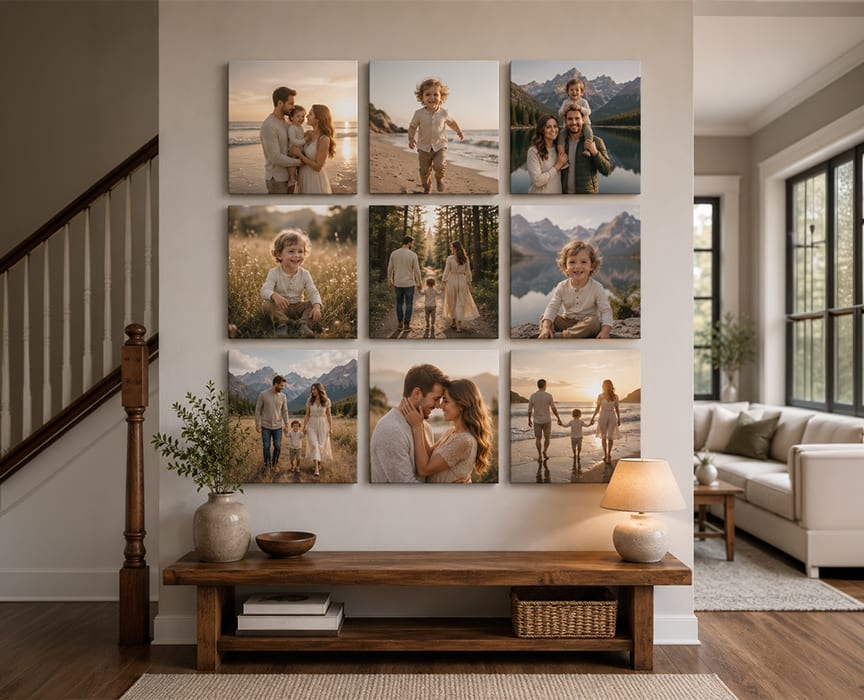
A classic grid is one of the easiest canvas collage ideas to get right. Use the same canvas size for every photo and keep equal spacing between each piece. This layout looks clean, balanced, and organized.

It works well for family portraits, wedding photos, baby milestones, travel memories, or any photo set with a similar tone. A grid also suits living rooms, hallways, and stair landings where you want a neat display.
2. Timeline Memory Wall

Timeline Memory Wall

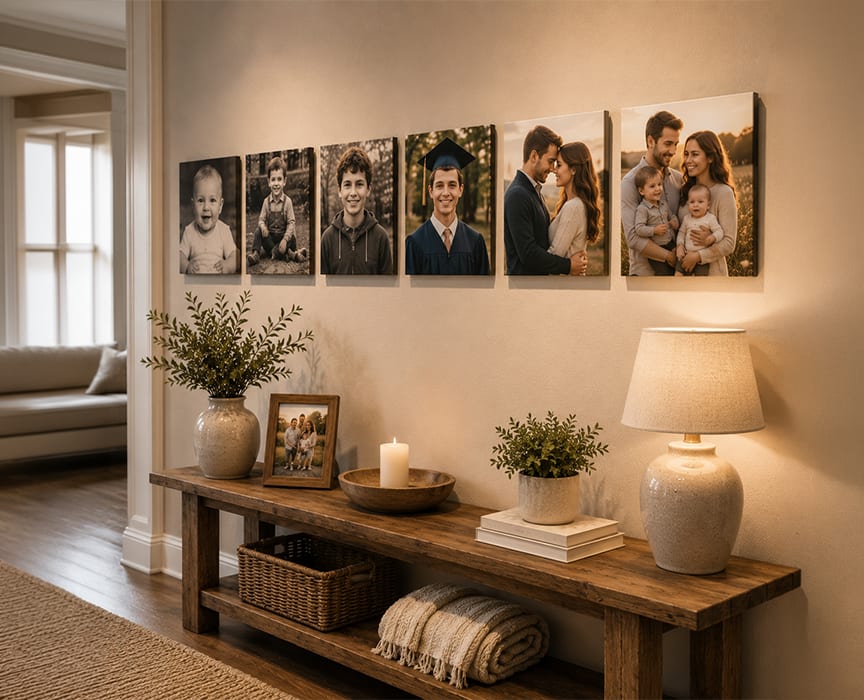
A timeline wall is perfect when your photos tell a story. You can arrange pictures from older memories to newer ones, such as a child growing up, a relationship journey, travel years, or family celebrations.
This layout feels personal because every canvas has a place in the story. Keep the photo sizes similar so the focus stays on the memories rather than the layout.

3. Travel Photo Collage

Travel Photo Collage

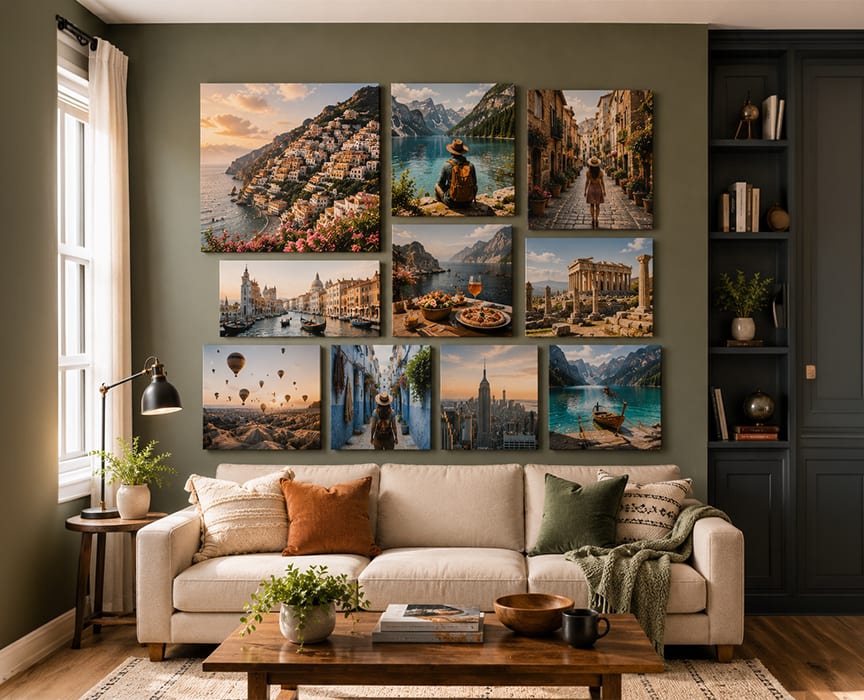
Travel photos are made for canvas collages. Mix scenic views, city shots, food pictures, candid moments, and landmark photos to bring your favorite trips back to life.

This idea works especially well in living rooms, home offices, and hallways. To keep the display clean, choose photos with similar colors or edit them in the same style before printing.

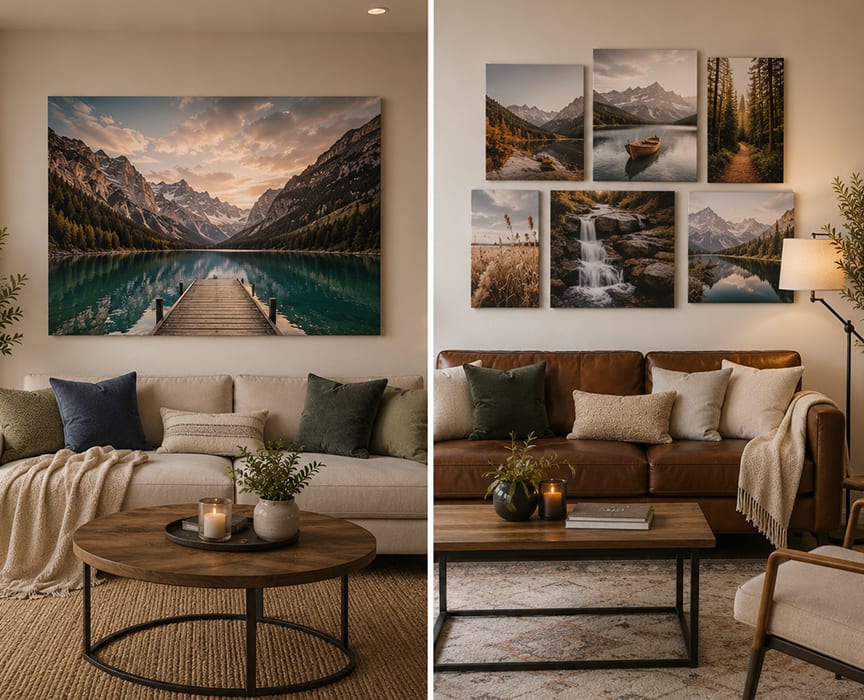
4. Large Statement with Smaller Prints

Large Statement with Smaller Prints

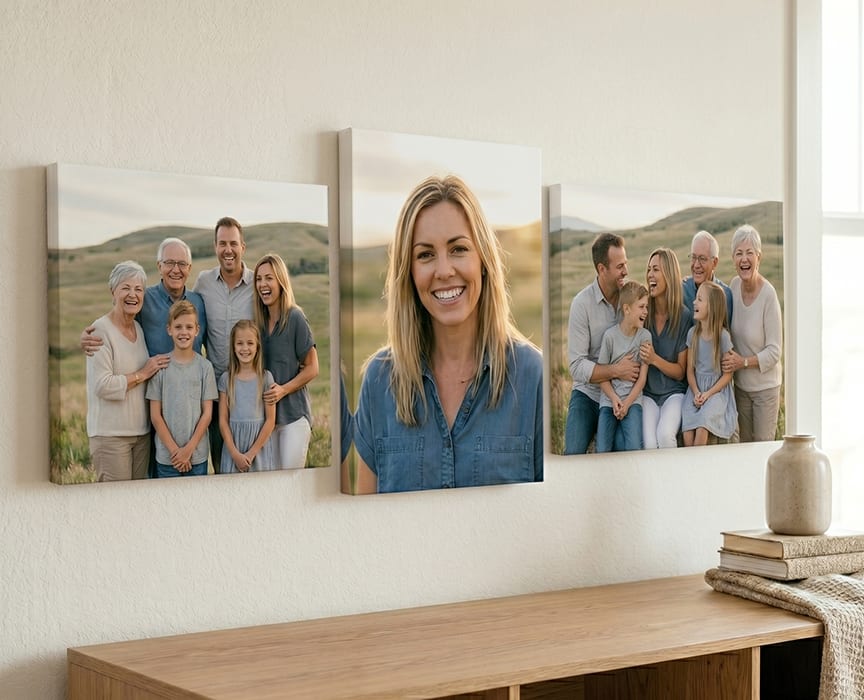
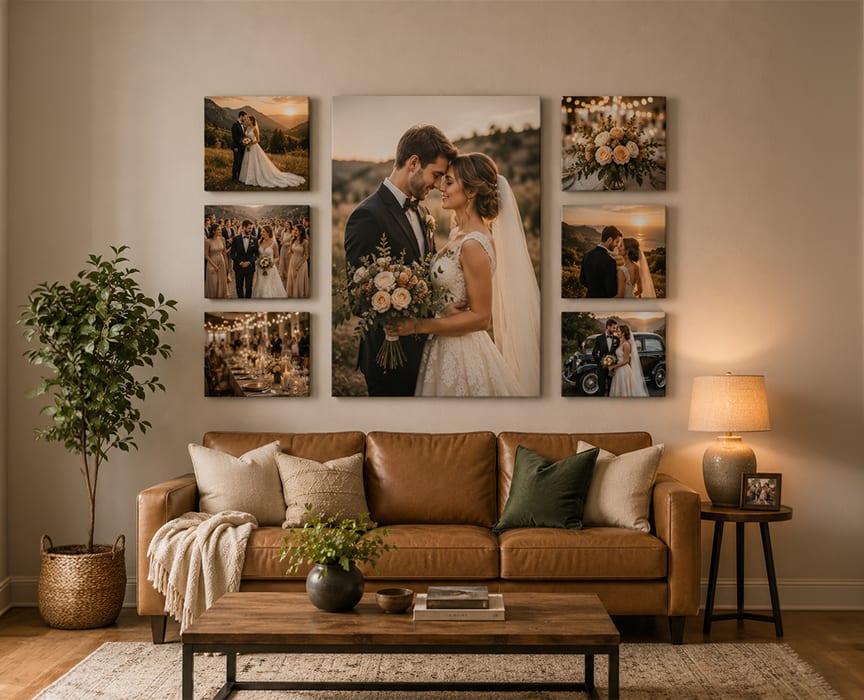
If you have one photo you love most, make it the center of the collage. Place one large canvas in the middle and surround it with smaller supporting prints.

This layout is great for wedding portraits, family photos, graduation pictures, or a favorite travel shot. The large print becomes the main focus, while the smaller canvases add detail and emotion.

5. Kids Memory Wall

Kids Memory Wall

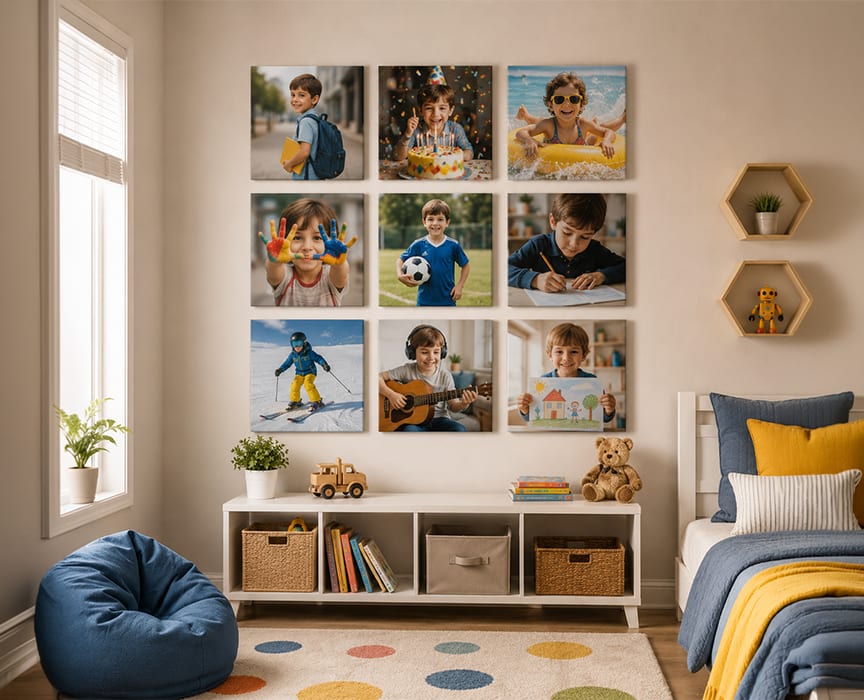
A kids memory wall can include school photos, birthday moments, artwork, sports pictures, and everyday candid shots. It is a sweet way to celebrate their growth and personality.

You can start small and add more canvas prints over time. Keep the spacing even so the wall still looks planned as the collection grows.

6. Quick Tips Before You Hang Your Collage

Quick Tips Before You Hang Your Collage

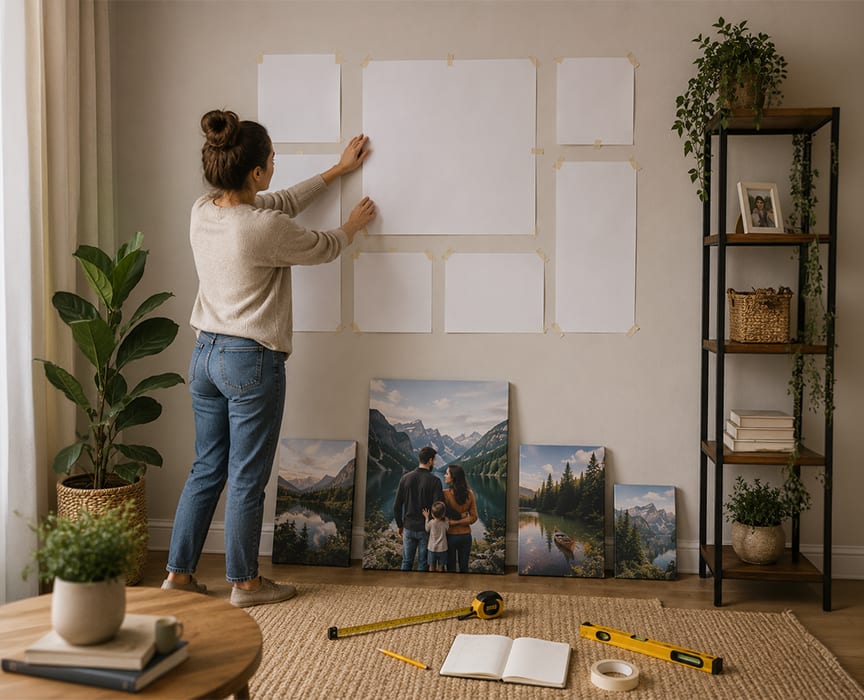
Choose a theme first so the wall feels connected. Measure your space before ordering. Keep around 2 to 3 inches between canvas prints for a neat look. Lay the arrangement on the floor or use paper templates on the wall before hanging.

A canvas collage should feel personal, but still easy on the eyes. With the right layout, your favorite photos can turn a blank wall into a warm and meaningful display. So, plan ahead and discover various kinds of collage ideas before finalizing your order.

How To Hang a Canvas Print Properly?

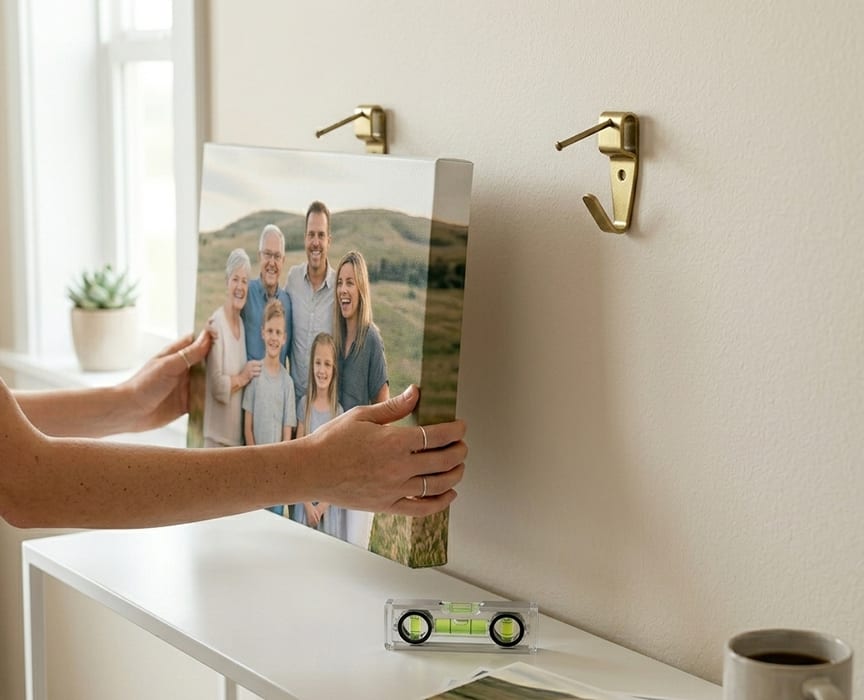
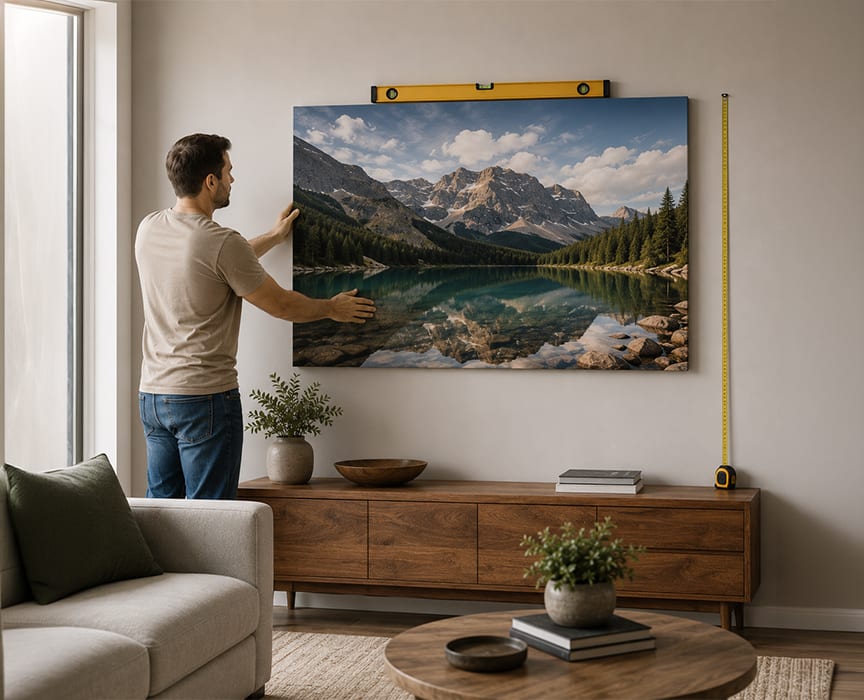
Hanging canvas prints does not have to be difficult. The right method depends on the size of your canvas, wall type, and whether you want a permanent or damage-free setup. Before you begin, measure the wall, mark the placement, and make sure the canvas sits at eye level for the best look.

1. Use Sawtooth Hangers for Small Canvas Prints

Use Sawtooth Hangers for Small Canvas Prints

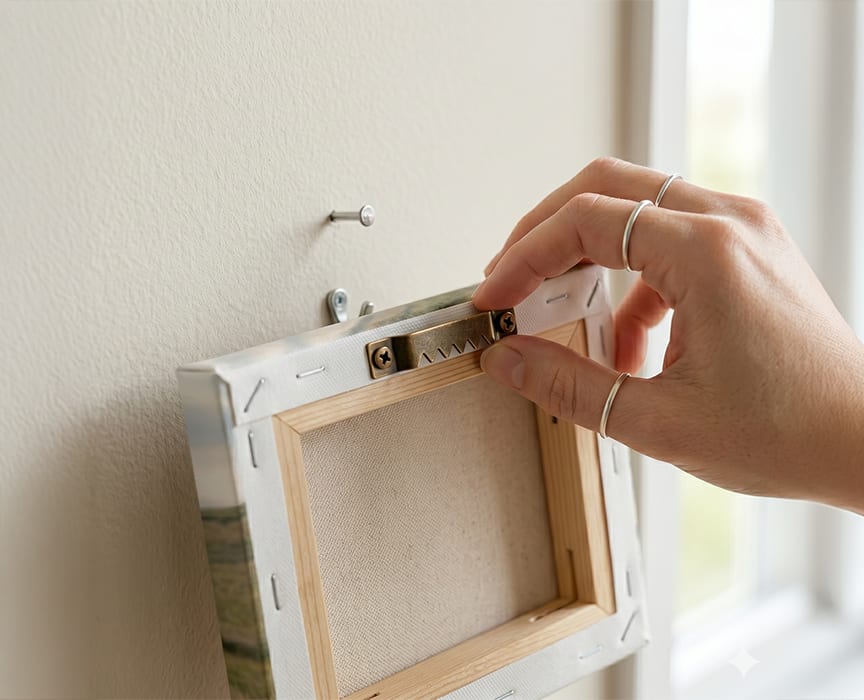
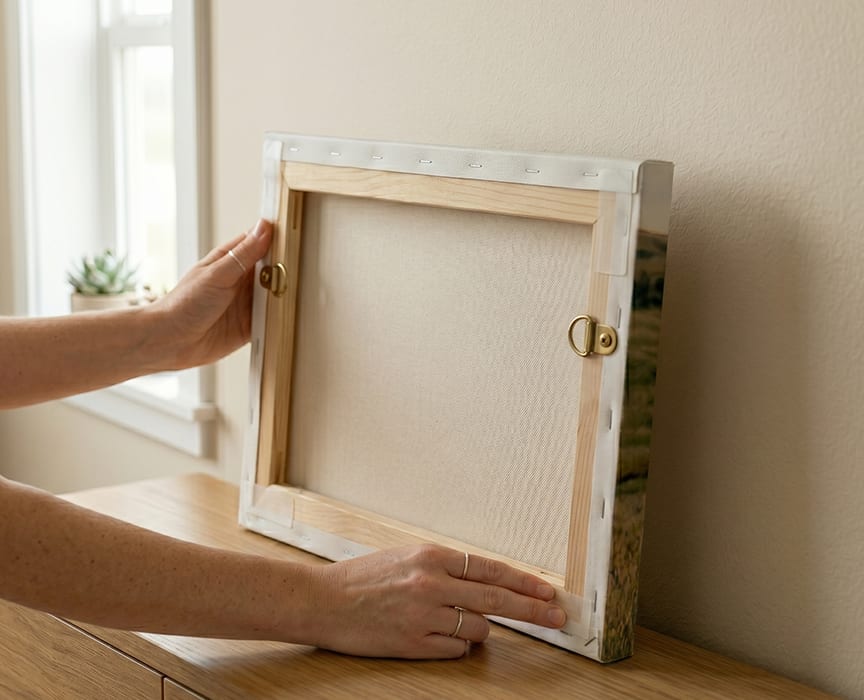
Sawtooth hangers are a simple option for small and medium canvas prints. They are usually attached to the back of the frame and can rest on a nail or screw in the wall.

This method works well for lightweight canvas photo prints, gallery walls, and smaller spaces. Use a level before hanging so the print does not tilt.

2. Try Picture Hanging Hooks for Better Support

Try Picture Hanging Hooks for Better Support

Picture hanging hooks are stronger than basic nails and are useful for medium canvas prints. They spread the weight more evenly and help protect the wall.

This is a good choice for bedrooms, living rooms, hallways, or office walls. Choose hooks based on the canvas weight so the print stays secure.

3. Use Wire Hanging for Larger Canvas Prints

Use Wire Hanging for Larger Canvas Prints

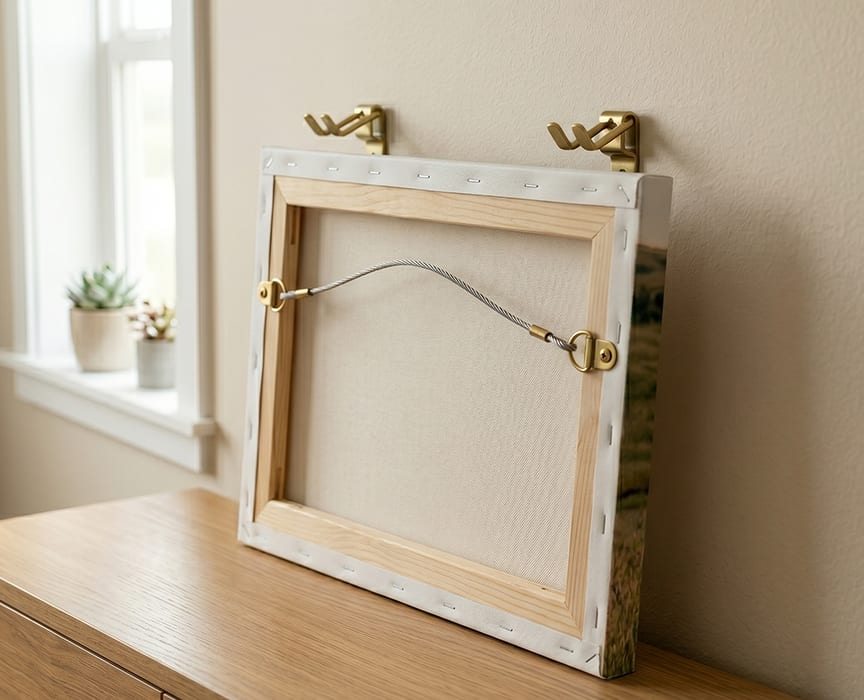
Wire hanging gives larger canvas prints better balance. A wire is attached to the back of the wooden frame, then hung on one or two wall hooks.

This method makes it easier to adjust the canvas after hanging. It works well for wide canvas pictures, statement wall art, and prints placed above sofas or beds.

4. Choose Adhesive Strips for Damage-Free Hanging

Choose Adhesive Strips for Damage-Free Hanging

Adhesive strips are a good option if you rent your home or do not want to drill holes. They work best for lightweight canvas prints on smooth, clean walls.

Make sure to follow the weight limit on the package. Press the strips firmly and wait as directed before hanging the canvas. Avoid using them on rough, textured, or damp walls.

5. Use Wall Anchors for Heavy Canvas Prints

Use Wall Anchors for Heavy Canvas Prints

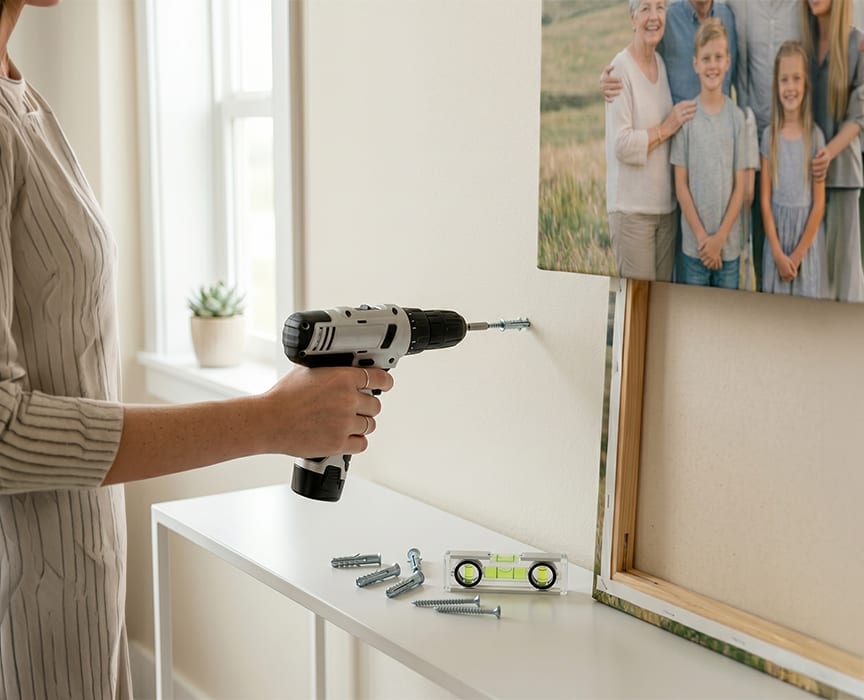
For large or heavy custom canvas prints, wall anchors offer extra strength. They are especially helpful when you cannot place the hardware directly into a wall stud.

Use anchors for oversized canvas wall art, multi-panel canvas prints, or framed canvas pieces. Measure carefully and use a level so the final display looks straight and polished.

A small amount of planning before hanging your canvas prints can make them look professionally placed. Check the height, spacing, and hardware before hanging, and your wall will feel clean, balanced, and ready to enjoy.

Care Tips to Make Canvas Prints Last Longer

Canvas prints can stay beautiful for years with simple care. You do not need special tools or strong cleaners. In fact, gentle handling is the safest way to protect the surface, color, and frame. Here are easy tips to help your canvas art stay fresh for longer.

1. Dust It Every Few Weeks

Dust It Every Few Weeks

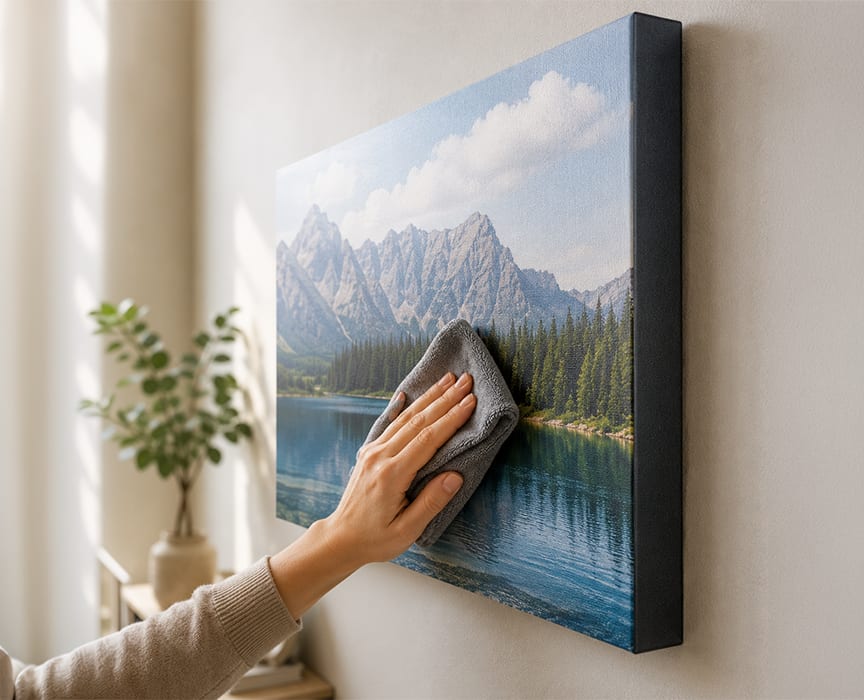
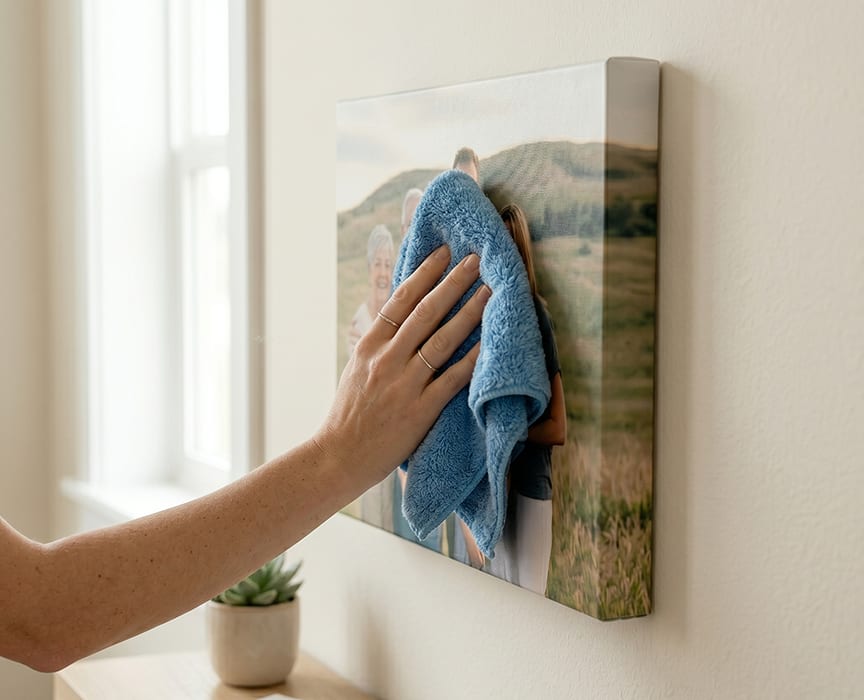
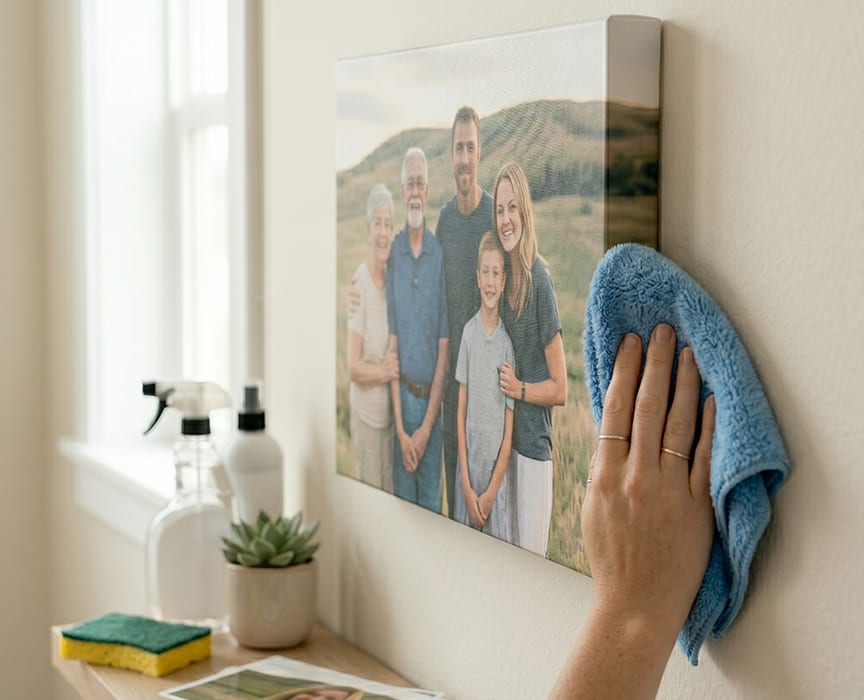
Dust can settle on canvas over time and make the print look dull. Use a soft microfiber cloth or a dry, soft-bristle brush to clean the surface. Move gently across the canvas without pressing too hard.

2. Avoid Harsh Cleaners

Avoid Harsh Cleaners

Do not use chemical sprays, glass cleaners, rough sponges, or cleaning wipes on canvas prints. These can damage the printed surface or affect the color. A dry cloth is usually enough for regular cleaning.

3. Dab Small Stains Carefully

Dab Small Stains Carefully

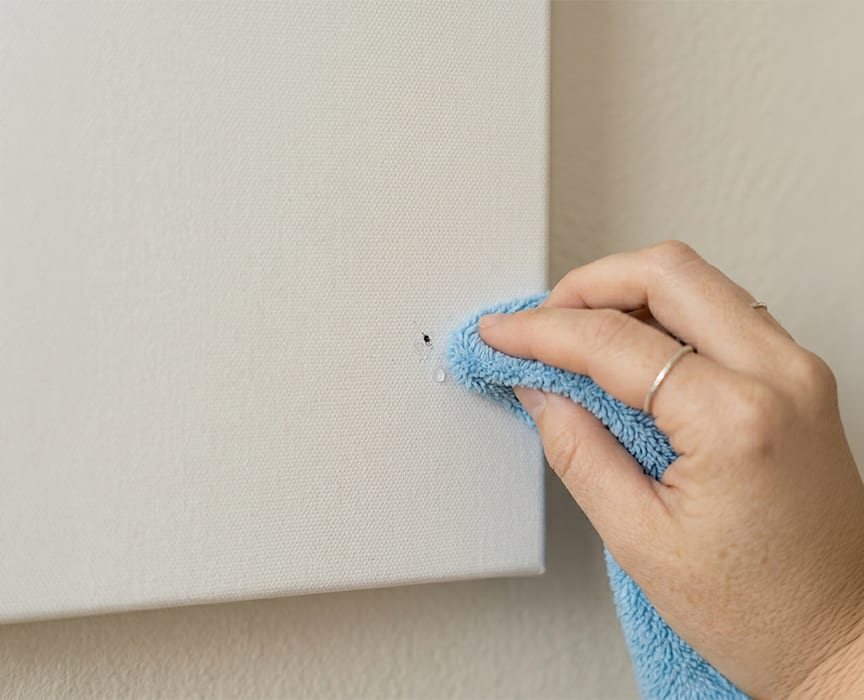
If you notice a small mark, use a slightly damp cloth. Dab the spot gently instead of rubbing it. Too much water can weaken the canvas, so keep the cloth barely damp and never soak the surface.

4. Let the Canvas Air Dry

Let the Canvas Air Dry

After spot cleaning, let the canvas dry naturally. Do not use a hair dryer, heater, or direct sunlight to speed up drying. Heat can affect the canvas material and may cause warping or surface damage.

5. Keep It Away from Direct Sunlight

Keep It Away from Direct Sunlight

Strong sunlight can fade canvas photo prints over time. Hang your canvas art in a place with soft or indirect light. This is especially important for bright family photos, travel pictures, and colorful artwork.

6. Watch Out for Moisture

Watch Out for Moisture

Canvas prints should not be placed in damp areas like bathrooms, laundry rooms, or humid corners. Moisture can affect the fabric, frame, and print quality. A dry room with good airflow is always a better choice.

7. Store It the Right Way

Store It the Right Way

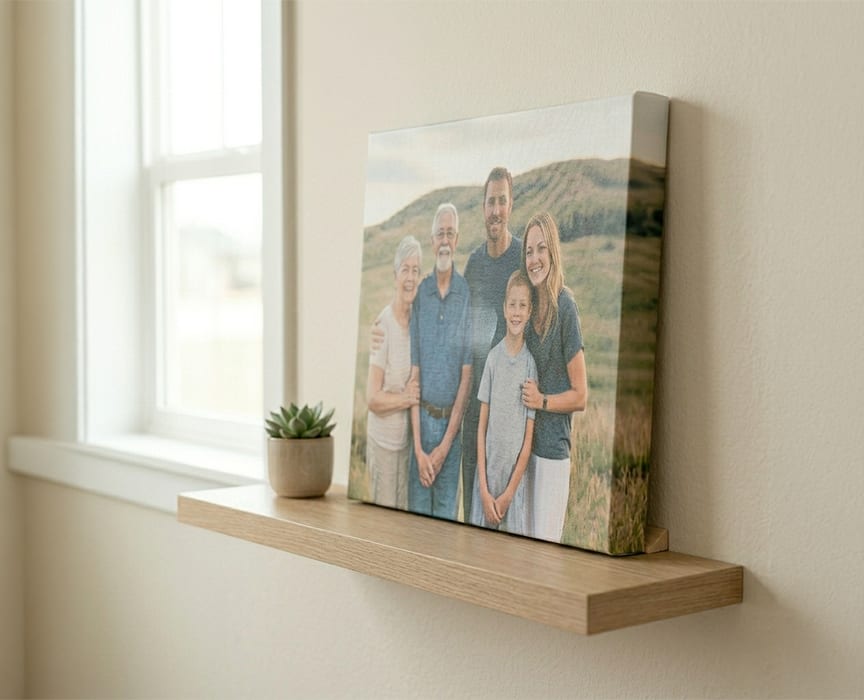
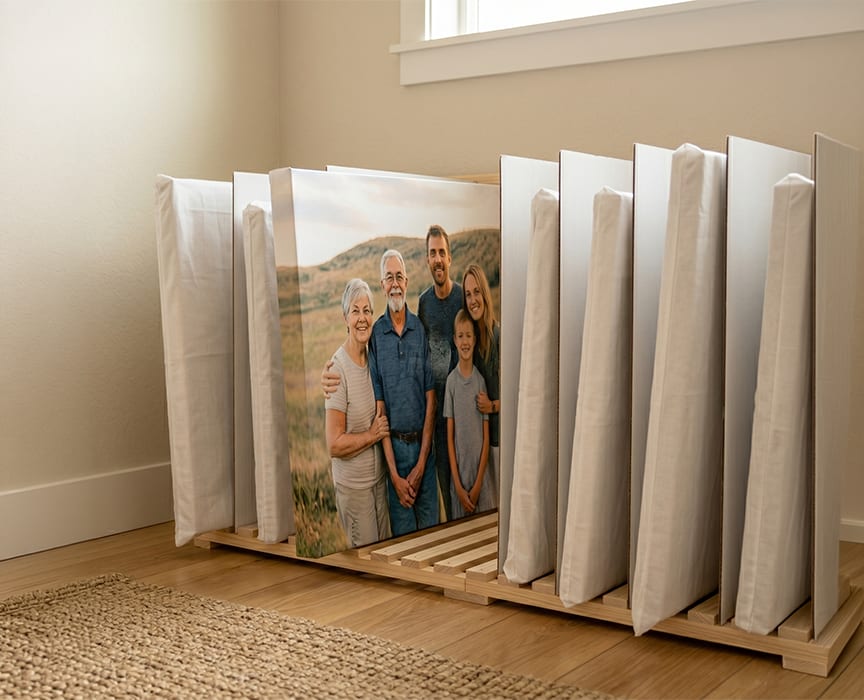
If you need to store canvas pictures, keep them upright in a cool, dry place. Cover them with protective material and avoid stacking heavy items on top. This helps prevent dents, bending, and scratches.

A little care goes a long way, and learning about the proper ways to clean canvas prints pay off in the long run. Dust your canvas prints regularly, clean stains gently, and choose the right spot on the wall. These small habits can help your custom canvas prints stay bright, clean, and ready to display.

Using Large Canvas Prints for Statement Wall Art

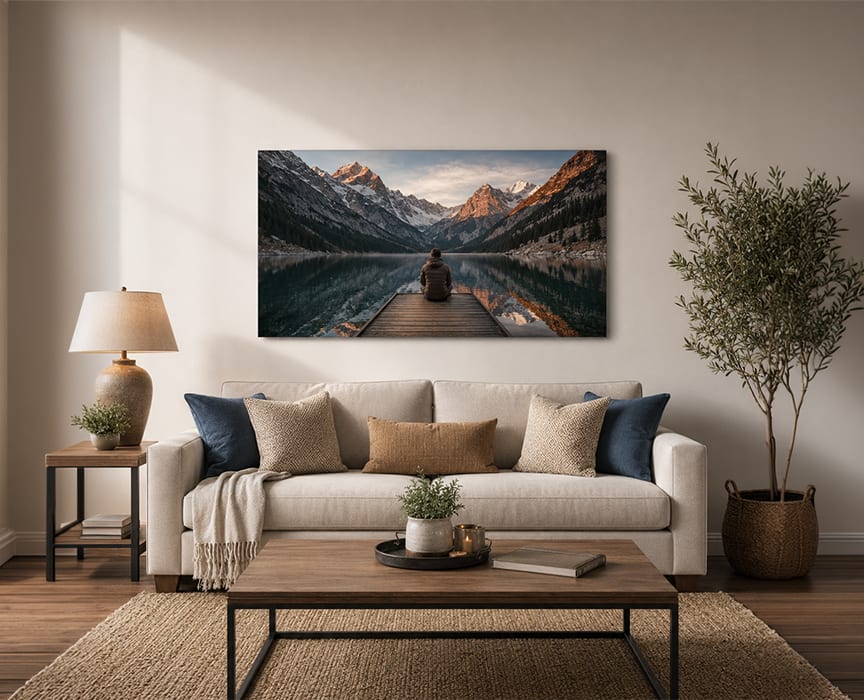
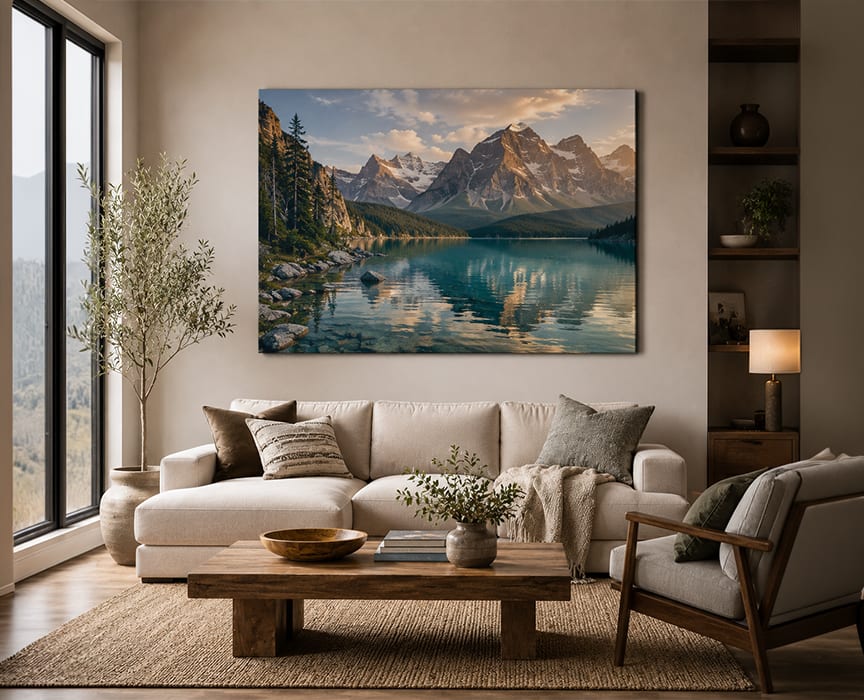
Large canvas prints can make a blank wall feel finished without adding too many decor pieces. They work well when you want one photo, artwork, or design to become the main focus of the room. The right image, size, and placement can turn simple wall space into something bold and personal.

1. Pick a Wall That Needs a Focal Point

Pick a Wall That Needs a Focal Point

Large canvas wall art works best on empty walls that feel unfinished. Think above the sofa, bed, dining console, fireplace, office desk, or entryway bench. These spots already draw attention, so a large print feels natural there.

2. Choose a Size That Fits the Space

Choose a Size That Fits the Space

A canvas above furniture should usually cover about two-thirds of the furniture width. If the print is too small, the wall may still look empty. If it is too large, the room can feel crowded.

3. Use a Clear, High-Quality Photo

Use a Clear, High-Quality Photo

Large canvas prints show every detail, so image quality matters. Use the original photo file whenever possible. Avoid screenshots, blurry images, or compressed social media downloads.

4. Go for Strong Visual Impact

Go for Strong Visual Impact

The best large canvas pictures are easy to understand from a distance. Landscapes, family portraits, wedding photos, travel shots, pets, abstract art, and city views all work well when the subject is clear.

5. Match the Colors to Your Room

Match the Colors to Your Room

Your canvas does not have to match everything, but it should feel connected to the space. Soft tones create a calm look. Bright colors can bring energy to neutral rooms.

6. Try One Large Panel for a Clean Look

Try One Large Panel for a Clean Look

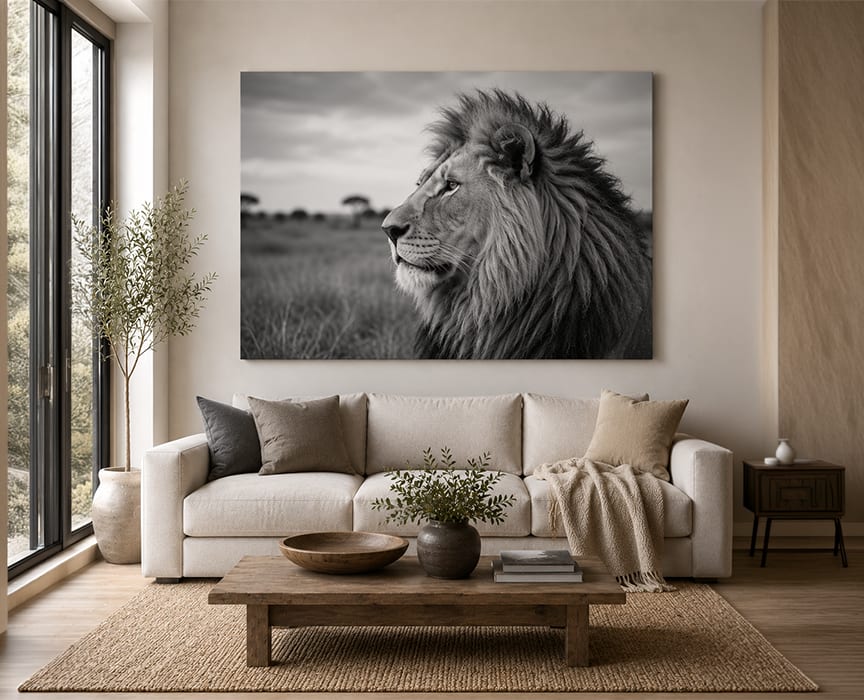
A single large canvas print is simple and timeless. It works well for portraits, detailed artwork, black-and-white photos, and images where you want one strong center point.

7. Use Multi-Panel Prints for Wide Walls

Use Multi-Panel Prints for Wide Walls

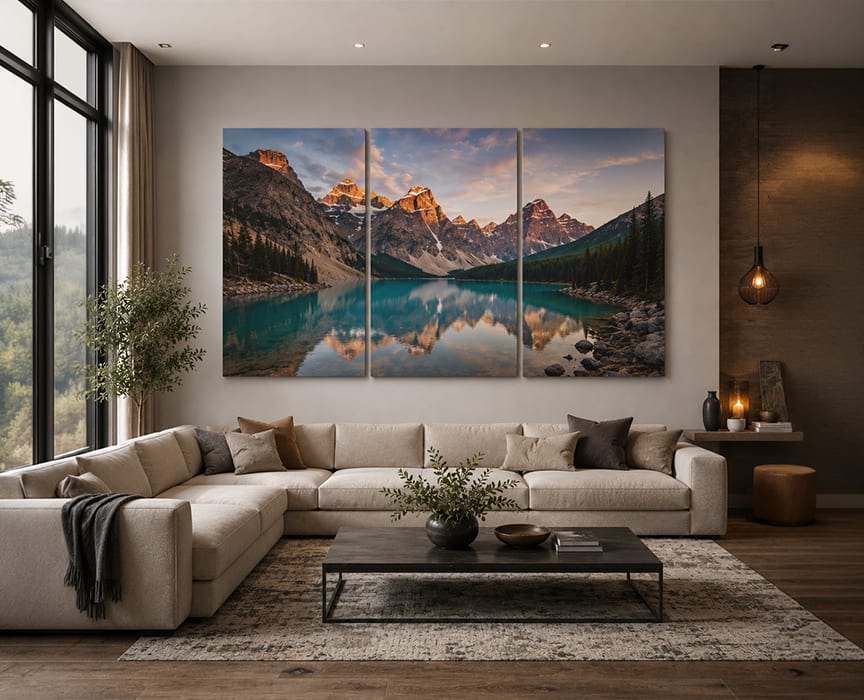
For large open walls, split canvas prints can add movement. A triptych or multi-panel layout works especially well for panoramic photos, skylines, beaches, mountains, and modern interiors.

8. Hang It at the Right Height

Hang It at the Right Height

Placement can change the whole look. Keep the center of the canvas close to eye level. When hanging it above furniture, leave enough breathing room between the furniture and the bottom of the canvas.

Large canvas prints are a simple way to make your wall feel bold, styled, and personal. Start with a great photo, choose the right size, and give it enough space to stand out.

Summing It Up

Canvas prints are more than simple photo displays. They can help you decorate blank walls, preserve special memories, and add a personal touch to any room. The best results come from making thoughtful choices before you order.

Start with a clear, high-quality photo. Choose a canvas size that fits your wall and furniture. Pick a wrap style that protects the main details of your image. If you want something bold, try a large canvas print or a split canvas layout. If you want to display many memories together, a canvas collage can be a great choice.

Once your canvas arrives, proper hanging and care matter too. Use the right hardware, place the canvas at a comfortable viewing height, keep it away from direct sunlight and moisture, and clean it gently with a soft cloth. These small steps can help your canvas prints stay beautiful for years.

The right canvas print should feel personal, balanced, and easy to enjoy every day. With the right photo, size, style, and placement, your favorite moments can become wall art that makes your space feel warmer and more complete.