Free Shipping
 Extra Savings


Canvas Sizes on Wall: Visual Guide for Perfect Placement
Listen to Content
A bare wall stares back at you, full of potential but offering no guidance. You've found the perfect canvas prints, one that captures a moment worth preserving, yet the question lingers: will it actually look right once it's hung? Choosing canvas sizes for wall placement isn't guesswork. It's a visual science that balances proportion, eye level, and the unique character of each room. Get it wrong, and even stunning artwork feels lost or overwhelming. Get it right, and your space transforms into something that feels intentionally designed. This guide walks you through the practical rules that interior designers and gallery curators rely on, giving you the confidence to select and position canvas prints that enhance your home rather than cluttering it. Whether you're working with a compact hallway or an expansive living room wall, understanding scale and placement changes everything about how your personalized art commands attention.
Understanding Standard Canvas Dimensions and Scale
Canvas prints come in standard sizes designed for specific design purposes. Knowing what each size range achieves helps you align your vision with the right dimensions before ordering.
Small Accents: 8x10 to 12x16
Small canvases work best in clusters or tight spaces where a single piece needs to make a subtle statement. An 8x10 canvas fits perfectly on a narrow wall between windows or as part of a gallery arrangement. These dimensions suit bathroom walls, small entryways, or desk areas where viewing distance is minimal. A 12x16 print offers slightly more presence while maintaining that intimate, personal feel. Consider these sizes for detailed photographs where viewers will stand close, allowing them to appreciate fine textures and expressions.
Medium Statements: 16x20 to 24x36
This range represents the sweet spot for most residential applications. A 16x20 canvas holds its own above a console table, while a 24x36 piece anchors a reading nook or bedroom corner. Medium canvases work well as standalone focal points without overwhelming standard ceiling heights. They're also ideal for pairing, where two 20x24 pieces flanking a mirror create balanced visual weight. CanvasChamp offers extensive options within this range, making it easy to find dimensions that match your specific wall requirements.
Oversized Focal Points: 30x40 and Beyond
Large-scale canvases demand attention and require corresponding wall space to breathe. A 30x40 print typically needs about 5 to 6 feet of uninterrupted wall width to maintain balance without appearing cramped. These dramatic pieces work above king beds, behind sectional sofas, or in rooms with vaulted ceilings. Oversized canvases often feature landscape photographs or abstract imagery where the scale amplifies emotional impact.
Golden Rules for Wall Placement and Proportion
Professional placement follows specific formulas that consistently produce visually pleasing results. These rules eliminate the frustration of hanging artwork too high or selecting pieces that disappear against expansive walls.
The 57-Inch Eye Level Rule
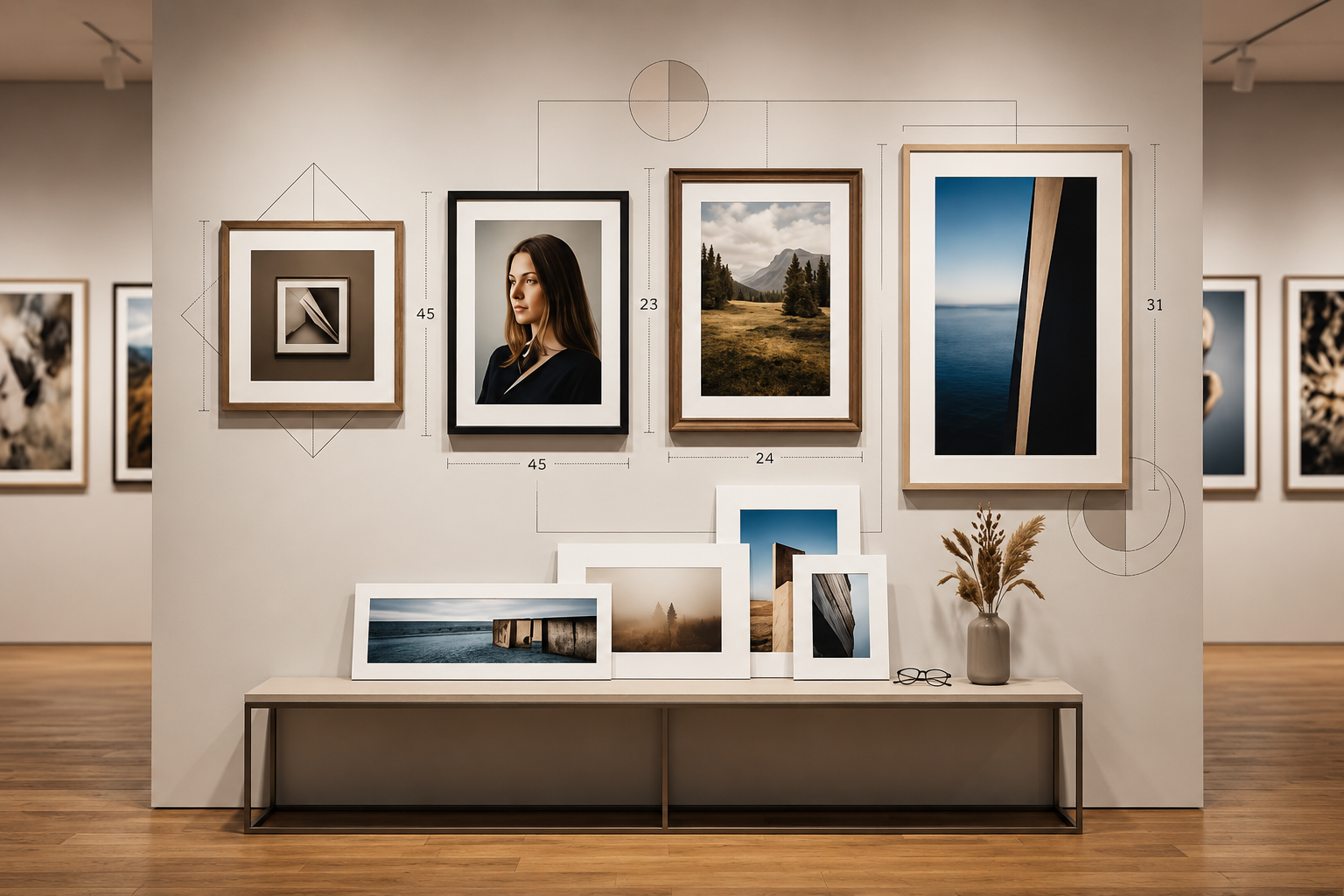
Gallery professionals hang artwork so the center point sits between 57 and 60 inches from the floor, matching the average human eye level. This standard ensures comfortable viewing without neck strain. Measure from the floor to 57 inches, then calculate where your hanging hardware needs to sit based on the canvas height. For a 24-inch tall canvas, the top edge would sit at 69 inches from the floor.
Calculating the Two-Thirds Furniture Ratio
Artwork hung above furniture should span approximately two-thirds of the furniture's width. A 72-inch sofa calls for a canvas arrangement measuring roughly 48 inches across. This could be a single large piece or a multi-panel set. The ratio prevents artwork from looking too small, a common mistake that makes carefully chosen pieces feel like afterthoughts. Leave 6 to 8 inches between the top of the furniture and the bottom of your canvas.
Spacing Between Multi-Panel Sets
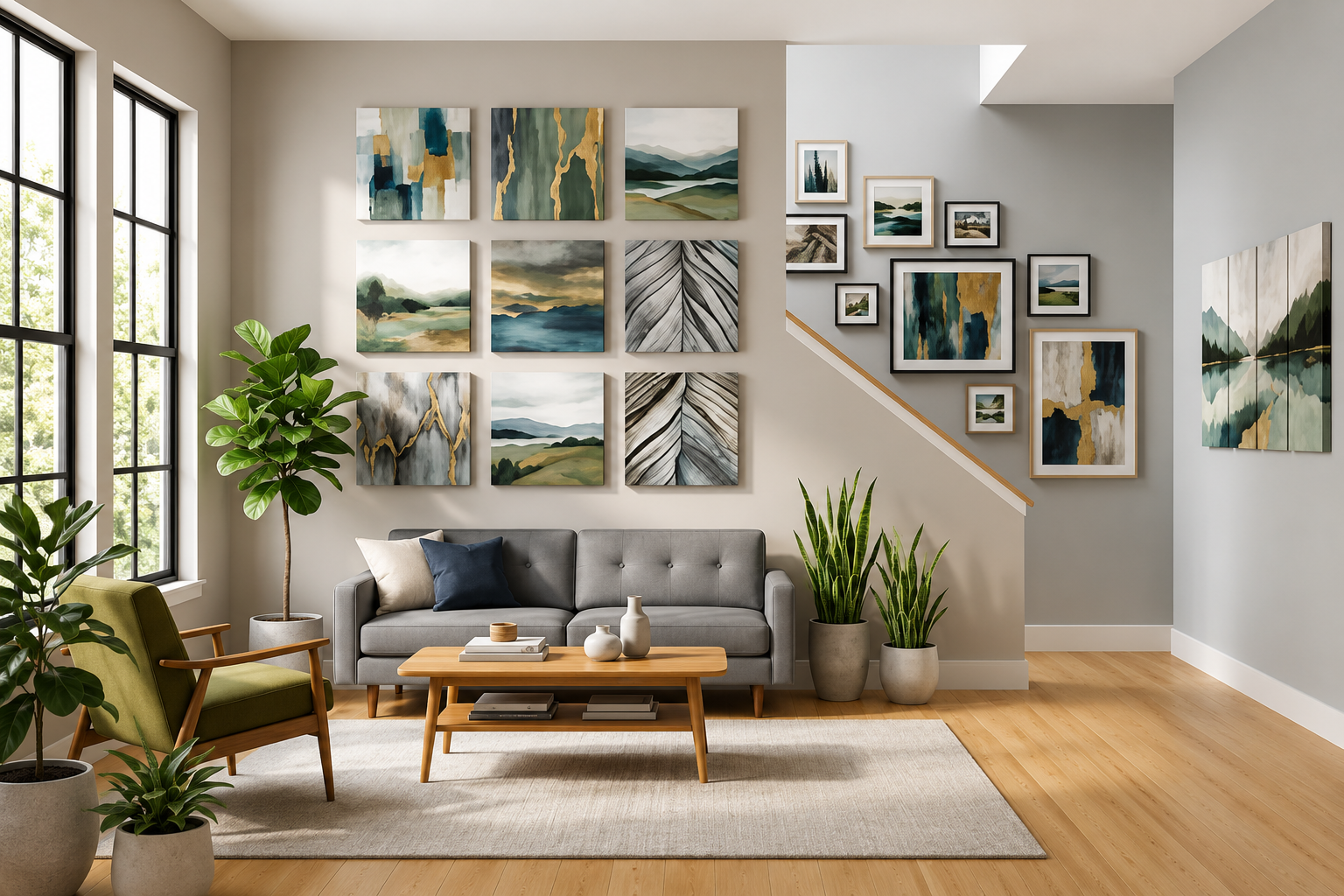
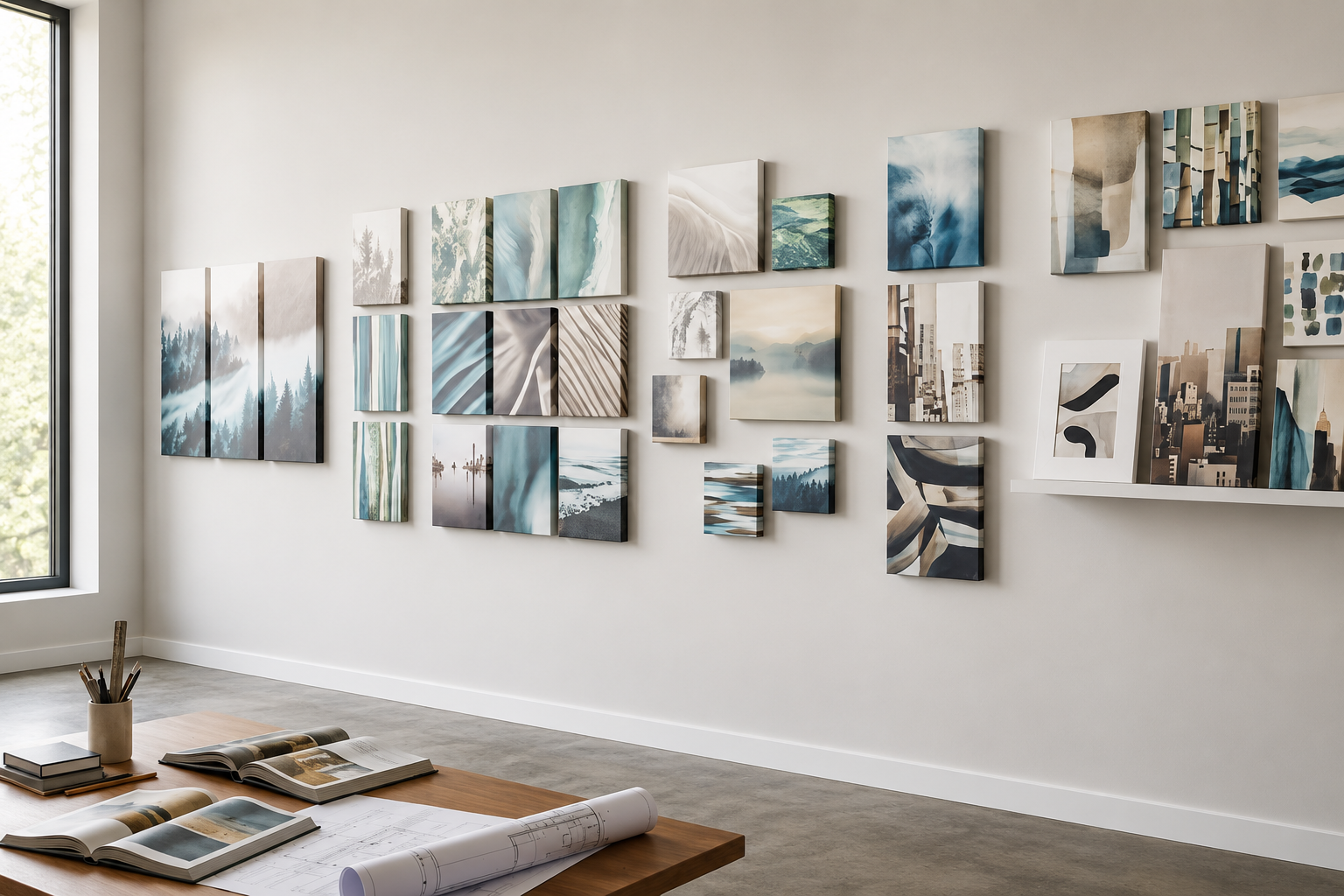
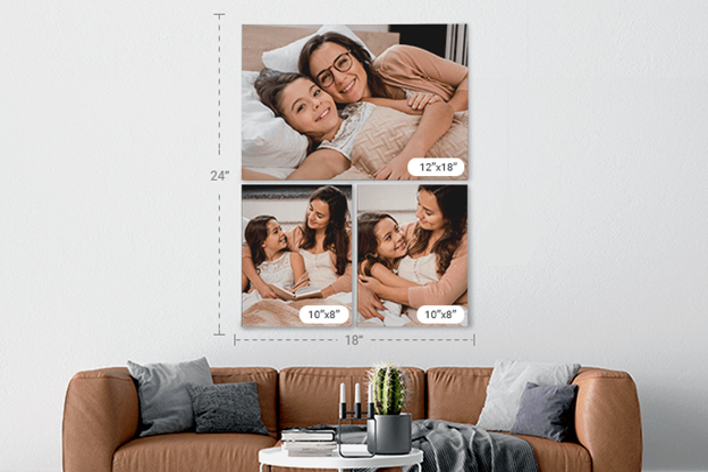
When hanging multiple canvases together, maintain consistent gaps of 2 to 3 inches between pieces. Tighter spacing creates visual unity, making separate canvases read as a single composition. Wider gaps work for gallery walls where you want each piece to maintain individual identity. Measure and mark your spacing before drilling to ensure alignment.
Room-by-Room Sizing Recommendations
Each room presents unique challenges based on furniture placement, traffic patterns, and typical viewing distances.
Living Room: Above the Sofa Strategies
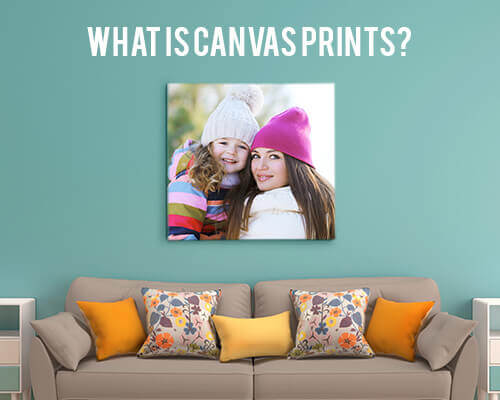
The wall above your sofa represents prime real estate for canvas displays. For standard 84-inch sofas, aim for canvas arrangements between 50 and 60 inches wide. Three 16x20 panels with 2-inch spacing create a cohesive triptych effect. Alternatively, a single 36x48 landscape orientation canvas makes a bold statement. Keep the bottom edge 8 to 10 inches above the sofa back to connect the artwork visually with the seating below.
Bedroom: Creating a Serene Headboard Anchor
Bedroom canvases benefit from calming imagery and proportions that don't overwhelm the sleeping space. Center your canvas above the headboard, matching or slightly exceeding the headboard width. For queen beds, 30x40 or 24x36 dimensions work well. When hanging art above a bed, ensure it is securely mounted with appropriate anchors to prevent accidents; lightweight canvas prints are generally safer than heavy framed glass artworks. Canvas prints from CanvasChamp offer lightweight alternatives that provide peace of mind.
Hallways and Narrow Transitional Spaces
Hallways present unique opportunities for vertical canvases or linear gallery arrangements. Portrait-oriented pieces elongate narrow corridors, while a series of small matching canvases creates rhythm as you move through the space. Hang artwork slightly lower in hallways since viewers are typically walking past rather than standing still.
Visualizing Layouts Before You Hang
Testing your layout before committing to wall holes saves frustration and repair costs.
The Paper Template Method
Cut kraft paper or newspaper to your intended canvas dimensions. Tape templates to the wall using painter's tape that won't damage paint. Live with the arrangement for a day or two, observing how it looks at different times and lighting conditions. Adjust positioning until the scale feels right, then mark hanging points directly through the paper.
Using Digital Mockup Apps
Smartphone apps allow you to photograph your wall and overlay canvas images at accurate scales. Some apps use augmented reality to show how artwork appears in real-time through your camera. Modern AR-based decor apps and CanvasChamp’s in-site preview tool provide accurate scaling and lighting simulation to assist in visualization. These tools prove especially valuable when deciding between multiple sizes or comparing single pieces against multi-panel arrangements.
Choosing the Right Orientation for Your Space
Canvas orientation dramatically affects how a piece interacts with surrounding architecture and furniture.
Landscape vs. Portrait Dynamics
Landscape orientation emphasizes horizontal lines, making rooms feel wider and more grounded. These work above long furniture pieces like sofas and credenzas. Portrait orientation draws the eye upward, adding perceived height to rooms with standard ceilings. Use portrait canvases in narrow wall sections or to balance tall furniture like bookcases.
Square Canvases for Modern Symmetry
Square formats offer greater versatility than rectangular canvases. A 24x24 canvas works equally well in both portrait- and landscape-oriented arrangements. Square pieces also pair naturally, creating balanced diptychs without the visual weight difference that rectangular pairs sometimes produce. Modern, minimalist interiors benefit most from square canvas proportions.

Frequently Asked Questions
What size canvas should I hang above a queen bed?
A 30x40 or 24x36 canvas typically works best above queen beds. The artwork should span approximately two-thirds of the headboard width, creating visual balance without overwhelming the sleeping area.
How high should I hang a canvas in a room with 9-foot ceilings?
Follow the 57–60 inch center rule for most spaces; if ceilings exceed 9 feet, artwork may be raised slightly to maintain proportional balance while staying within a comfortable eye-level range.
Can I mix different canvas sizes in a gallery wall?
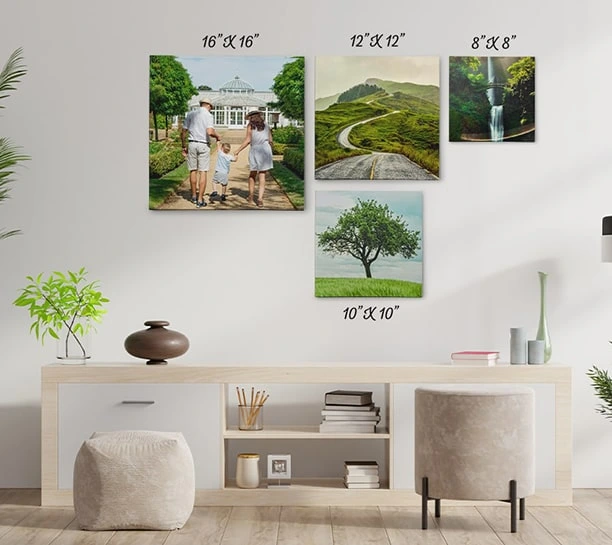
Absolutely. Successful gallery walls often combine various sizes while maintaining consistent spacing and a unifying element like frame style, color palette, or subject matter.
How much space should I leave between a canvas and the ceiling?
Leave at least 6 inches between the top of your canvas and the ceiling. Crowding artwork against the ceiling makes rooms feel shorter, and the placement feels unplanned.
Making Your Walls Work for Your Memories
Understanding canvas sizes and wall placement transforms decorating from stressful guesswork into confident decision-making. The principles remain consistent: honor the two-thirds rule, respect eye-level viewing, and always test your layout before hanging. Your walls deserve artwork that fits their proportions and enhances your daily experience of each room.
Ready to bring your favorite photographs to life? CanvasChamp offers premium custom canvas prints at exceptional value, with sizes ranging from small accents to dramatic oversized statements. Explore their customization options to create personalized wall art that perfectly fits your space.