Free Shipping
 Extra Savings


How to Use the Rule of Thirds for Better Canvas Wall Art
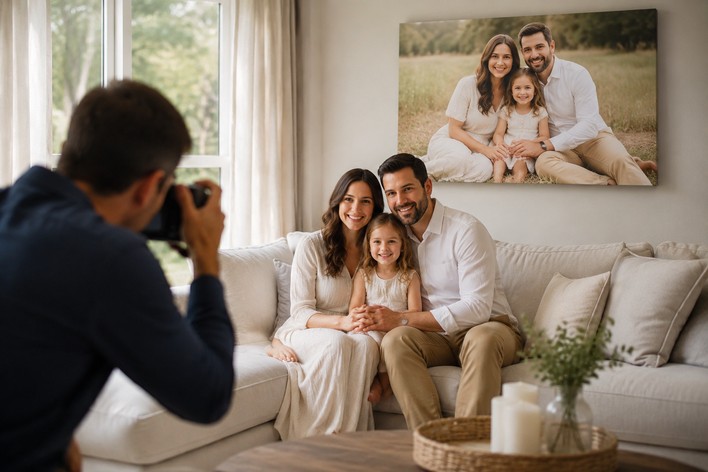
Listen to Content
A beautiful canvas begins with a well-composed photograph. Image sharpness and lighting matter, but the position of the subject can have an equally strong effect on the finished print. One of the easiest composition techniques to learn is the rule of thirds.
This technique can help you create balanced portraits, landscapes, travel pictures and family photographs. It is especially useful when you plan to enlarge an image for canvas wall art because small composition problems become more noticeable at a larger size.
What Is the Rule of Thirds in Photography?
To understand what is the rule of thirds in photography, picture two horizontal lines and two vertical lines placed across your image. These lines divide the frame into nine equal rectangles.
The four points where the lines cross are called intersection points. Instead of always placing the main subject in the exact center, position it close to one of these points or along one of the grid lines.
Many cameras and smartphones have an optional grid setting that displays these lines while you take a photo. The grid does not become part of the saved image; it simply helps with composition.
You may occasionally see this method called the third rule, though rule of thirds is the standard photography term.

Why Does the Rule of Thirds Work?
A centered subject can look formal, symmetrical and direct. That can be effective for certain images, but using the photography rule of thirds often gives the viewer more room to explore the scene.
Placing the subject away from the center can:
- Create a clearer visual path through the photograph
- Add space that shows where a person is looking or moving
- Balance the subject with scenery or supporting details
- Make landscapes feel more spacious
- Give portraits a relaxed, natural appearance
- Make the composition more suitable for wide canvas formats
The goal is not to leave one side of the image empty without purpose. The open area should support the story, direction or mood of the photograph.
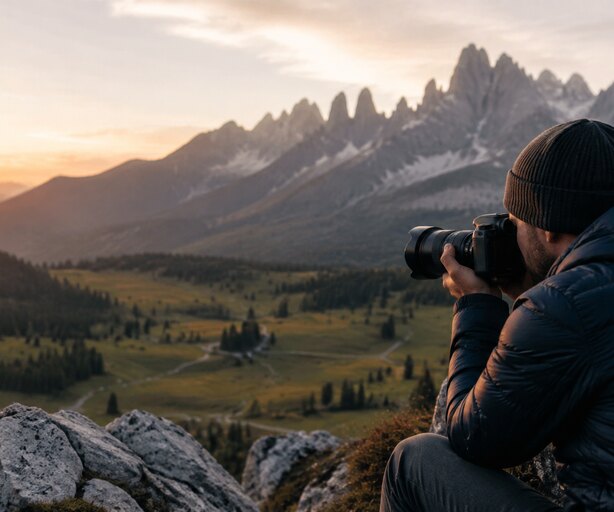
How to Use the Rule of Thirds Grid
Start by turning on the grid in your phone or camera settings. When composing the image, identify its most important element. This might be a person’s face, an animal, a tree, a building or the setting sun.
Place that element near one of the four intersections. You do not have to position it with mathematical precision. The grid is a visual guide rather than a strict measurement.
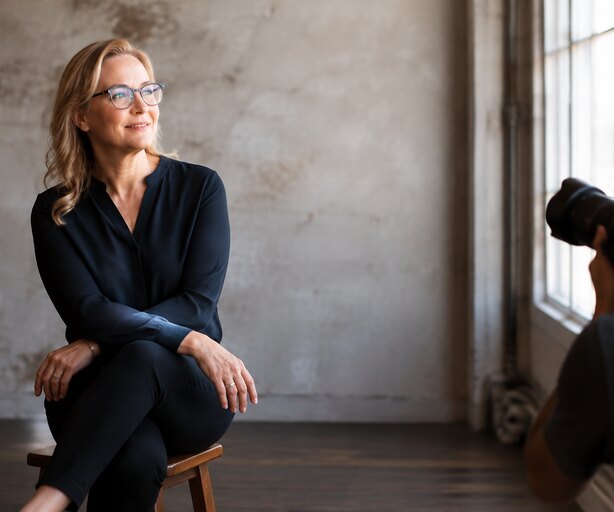
For a portrait, place the subject’s eyes near the upper horizontal line. If the person is facing sideways, leave more open space in front of their gaze than behind their head.
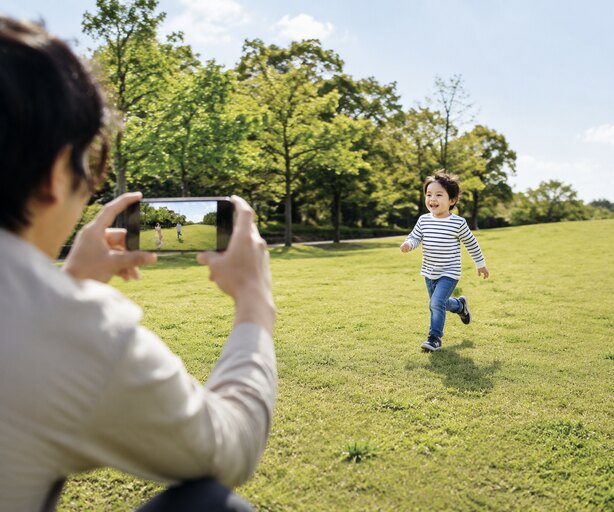
For a moving subject, such as a child running or a car traveling, leave space in the direction of movement. This makes the picture feel less cramped.
Applying the Rule to Portrait Photography
The rule of thirds in photography can help portraits feel natural without reducing the importance of the person.
For a close-up portrait, position the eyes near the upper third of the frame. One eye may sit close to an upper intersection point. For a wider portrait, place the person along the left or right vertical grid line.
Pay attention to the background before taking the picture. An off-center subject leaves more of the surroundings visible, so remove distracting objects where possible. Watch for poles, branches or furniture that appear to extend from the subject’s head.
When preparing portraits for canvas prints, leave some extra room around faces and bodies. This gives you flexibility when selecting a canvas size, crop and edge treatment.
Using the Grid for Family and Group Photos
For a family portrait, the grid can help distribute people across the frame. Place the faces near the upper horizontal third, then balance the group on the left and right sides.
Avoid squeezing everyone into the center if the surroundings add meaning. A family standing beside a favorite home, on a beach or at a wedding venue may look better when the setting remains visible.
If one person is the main focus, place that person near an intersection and use the remaining family members to create visual balance. For a group where everyone has equal importance, a centered or symmetrical arrangement may work better.

Rule of Thirds for Landscapes
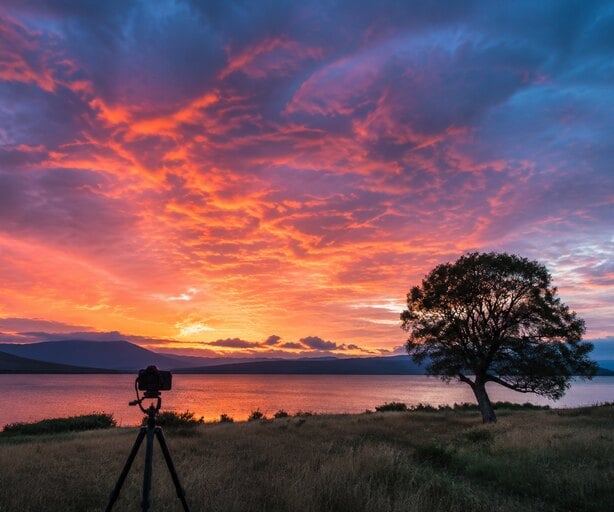
Landscape photographers often use the horizontal grid lines to position the horizon. Which line you choose depends on the most interesting part of the scene.
Place the horizon near the lower third when the sky contains dramatic clouds, a sunset or strong colors. This gives more space to the sky.
Place it near the upper third when the foreground contains interesting rocks, flowers, reflections, roads or textures. This directs attention toward the land.
Avoid placing the horizon through the exact center unless the scene has strong symmetry, such as a mountain reflected in still water. Keep the horizon level, as even a slight tilt can become distracting when displayed as large canvas prints.
Composing Photos for Panoramic Canvas Art
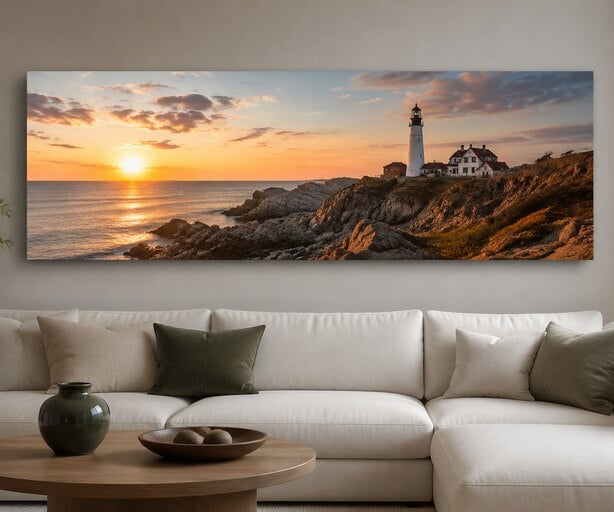
Wide landscapes, city skylines and coastal views work well as panoramic canvas prints. The wider shape makes horizontal composition especially important.
Use one horizontal third for the horizon, then place the main point of interest near a vertical intersection. A lighthouse, mountain peak, tree or distant building can serve as an anchor for the scene.
Check the far left and right sides of the frame before taking the picture. A panoramic crop may remove more from the top and bottom, so the important visual information should extend across the width.
Can You Apply the Rule During Editing?
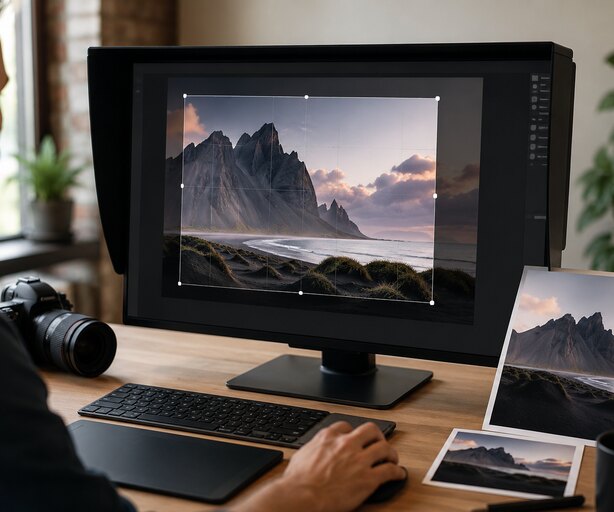
You can improve existing rule of thirds photos by cropping them in an editing tool. Many photo-editing apps automatically display a thirds grid when the crop feature is selected.
Move the crop box until the subject sits near an intersection or grid line. Keep enough resolution for the intended print size. Heavy cropping removes pixels, which may reduce image quality when the photo is enlarged.
Begin with the original file rather than a screenshot or social media download. The original usually contains more image data and gives you greater freedom to crop.
CanvasChamp’s design preview can help you review the final placement before ordering. Check the full composition, edge area and subject position rather than looking only at the center.
When Should You Break the Rule?
The rule of thirds is a useful starting point, not a requirement for every photograph. Some images look stronger with the subject in the middle.
Consider centered composition when photographing:
- Symmetrical buildings or interiors
- Reflections on calm water
- Roads, bridges or paths with leading lines
- Close-up faces with direct eye contact
- Minimal scenes with one dominant object
- Formal group portraits
- Repeating patterns
Breaking the rule works best when the centered placement has a clear purpose. Compare a few versions of the scene instead of relying on one composition.

Common Rule of Thirds Mistakes
Learning rule of 3rds photography involves more than placing a subject on a grid line. Watch for these common problems:
- Leaving open space that contains distracting objects
- Positioning a face too close to the canvas edge
- Cropping through hands, feet or joints
- Placing the horizon on a third but leaving it tilted
- Ignoring the direction in which the subject is looking
- Forcing the technique onto a naturally symmetrical scene
- Cropping so heavily that the file becomes unsuitable for enlargement
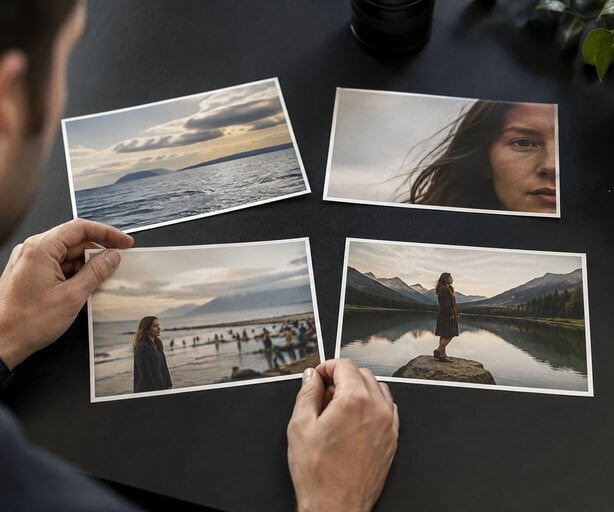
Take several versions when possible. Try the subject on the left, right and center, then decide which image tells the story most clearly.
Prepare Your Photo for Canvas Printing
Before ordering wall art, inspect the image at full size. Confirm that the main subject is sharp and that the background does not contain unwanted distractions.
Choose a canvas orientation that matches the composition. Vertical portraits usually suit portrait canvases, broad landscapes work well in horizontal formats, and wide scenic views may benefit from panoramic printing.
The answer to what is rule of thirds in photography becomes easier once you start using the grid regularly. With practice, you will recognize balanced subject placement without relying on visible lines. CanvasChamp can then turn that carefully composed image into wall art suited to your room and chosen display size.