Free Shipping
 Extra Savings


Glossy vs. Matte Canvas Prints: Finding the Best Finish for Your Photo
Listen to Content
The moment you upload your favorite photograph to a canvas printing service, one decision can dramatically alter how your memories appear on your wall: glossy or matte finish. This choice affects everything from color intensity to how your print interacts with room lighting. Finding the best finish for your photo isn't about one option being universally superior. It's about matching the finish characteristics to your specific image, room conditions, and aesthetic preferences. Whether you're displaying a vibrant sunset landscape or an intimate family portrait, understanding how each finish performs will help you make a confident decision. The difference between a print that captivates visitors and one that disappoints often comes down to this single selection. Let's break down exactly what separates these two finishes and how to choose wisely.
Understanding the Fundamentals of Canvas Finishes
Canvas prints receive their final appearance through protective coatings applied after printing. These coatings serve dual purposes: they protect your image from UV damage, dust, and moisture while also determining the surface texture and light behavior of your finished piece.
The Anatomy of a Glossy Canvas Coating
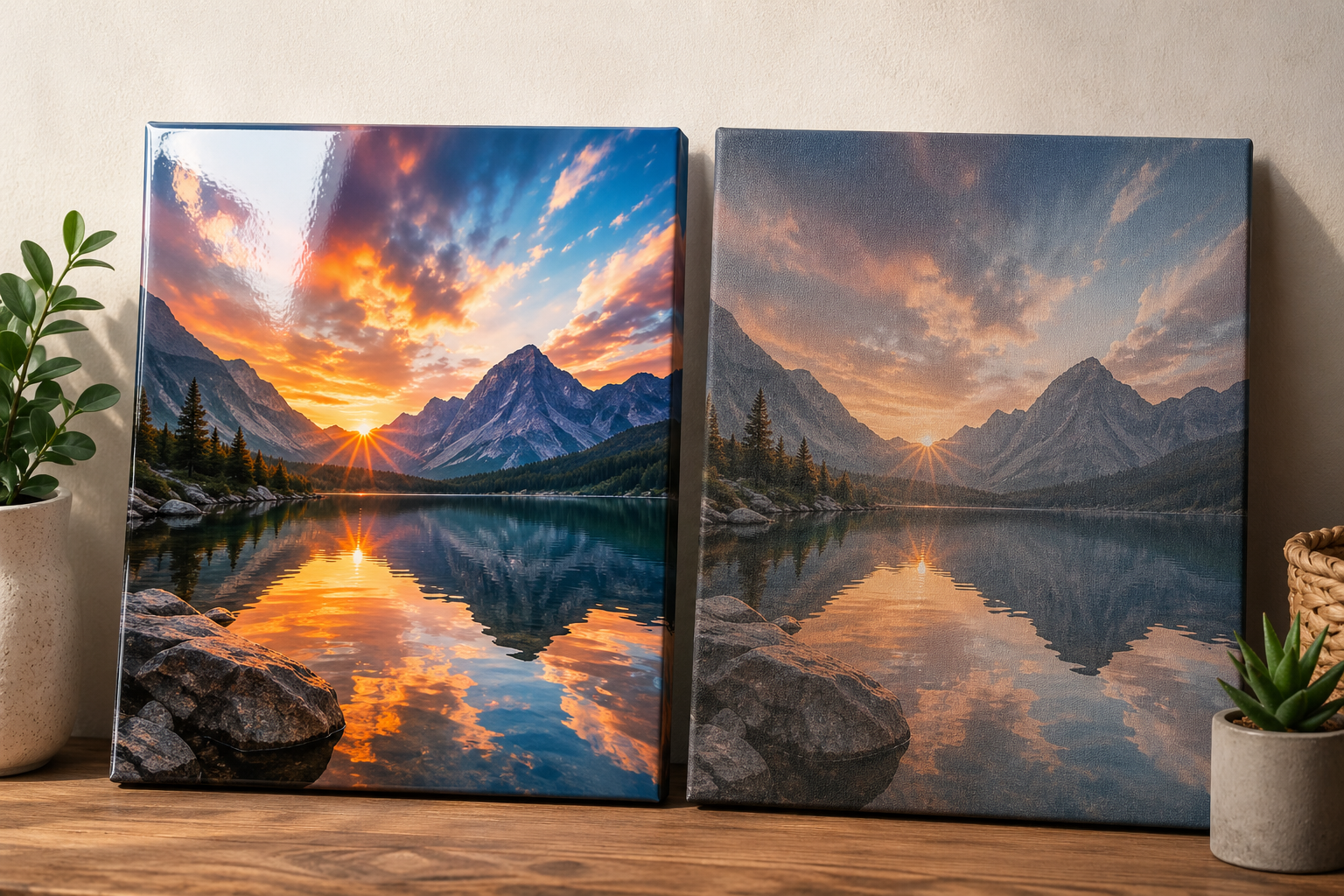
Glossy finishes feature a smooth, reflective surface layer that creates a polished, almost lacquered appearance. This coating reflects light directly back to the viewer, producing that characteristic shine associated with traditional photographs. The surface feels slick to the touch and amplifies the underlying ink colors. Glossy coatings typically contain higher concentrations of reflective polymers, creating a mirror-like quality when light strikes the surface at certain angles.
The Characteristics of a Matte Canvas Surface
Matte finishes diffuse light across the surface rather than reflecting it directly. Microscopic texture in the coating scatters incoming light rays, eliminating shine and creating a softer, more subdued appearance. The result resembles fine art prints or museum-quality reproductions. Matte surfaces feel slightly textured and maintain a consistent appearance regardless of viewing angle. This finish preserves the natural canvas texture more prominently, giving prints an artistic, hand-painted quality that many decorators prefer.
The Visual Impact on Color and Detail
The finish you select fundamentally changes how viewers perceive your photograph's visual qualities. Understanding these differences helps you anticipate how your specific image will translate to canvas.
Color Saturation and Vibrancy Levels
Glossy finishes can increase the perception of color saturation compared to matte alternatives, often appearing around 10–15% more vivid depending on lighting and image content. The reflective surface creates deeper, more vivid hues that pop off the canvas. Blues appear more electric, reds become more striking, and greens gain additional depth. Matte finishes present colors more accurately to the original file, but with reduced punch. This softer color presentation works beautifully for images where subtlety matters more than impact.
Contrast and Black Point Depth
Black areas in photographs appear significantly different between finishes. Glossy coatings produce deeper blacks with higher contrast ratios, making shadow details more dramatic. This enhanced contrast creates visual depth that draws viewers into the image. Matte finishes render blacks as slightly lighter, with a charcoal quality rather than true black. For high-contrast photography, glossy typically delivers more striking results.
Texture Visibility and Sharpness
Fine details and sharp edges render differently across finish types. Glossy surfaces enhance apparent sharpness by maintaining crisp transitions between tones. Matte finishes slightly soften these transitions, which can actually benefit portraits by smoothing skin imperfections. The visible canvas weave texture shows more prominently through matte coatings, adding an artistic dimension that some photographers specifically seek.
Environmental Considerations for Your Display
Your room's lighting conditions and traffic patterns should heavily influence your finish selection. The wrong choice can undermine even the most stunning photograph.
Managing Glare and Light Reflections
Glossy prints create problematic reflections in rooms with direct lighting, large windows, or recessed ceiling fixtures. Viewers may struggle to see the image clearly from certain positions as light bounces off the surface. Matte finishes eliminate this issue entirely, maintaining consistent visibility from any angle and under any lighting condition. For spaces with uncontrollable light sources, matte finishes offer a practical advantage. Consider where natural light enters your room and whether you can position the print to avoid direct illumination before selecting glossy.
Durability and Fingerprint Resistance
High-traffic areas demand practical considerations. Glossy surfaces show fingerprints, dust, and smudges immediately, requiring regular cleaning to maintain appearance. Matte finishes hide these imperfections effectively, making them ideal for hallways, children's rooms, or spaces where prints might be touched accidentally. Both finishes generally provide comparable UV resistance and archival protection when produced by reputable printers such as CanvasChamp, though actual longevity may vary depending on coating formulation and environmental exposure.
Matching the Finish to Your Photography Style
Different photographic genres pair naturally with specific finishes. These guidelines reflect professional printing industry standards developed over decades.
Best Choices for Landscapes and Nature
Landscape photography typically benefits from glossy finishes. The enhanced saturation makes skies more dramatic, foliage more lush, and water more luminous. Sunset and sunrise images gain particular impact from glossy coatings that intensify warm tones. Mountain scenes, ocean vistas, and forest photography all translate powerfully to glossy canvas. The increased contrast helps separate foreground elements from the background, creating a sense of depth that draws viewers into the scene.
Optimal Finishes for Portraits and Weddings
Portrait photography often works better with matte finishes. The softer rendering flatters skin tones and reduces the appearance of minor imperfections. Wedding photographs gain an elegant, timeless quality from matte surfaces that complement their emotional significance. The reduced contrast creates a romantic atmosphere appropriate for these intimate moments. Black-and-white portraits particularly shine on matte canvas, where the finish's artistic quality enhances the classic aesthetic.
Fine Art and Abstract Considerations
Abstract photography and artistic images benefit from matte finishes that emphasize the canvas texture. This combination creates gallery-quality presentations that feel intentional and curated. The visible weave pattern adds dimensionality to abstract compositions. Fine art reproductions almost universally use matte finishes to match museum presentation standards. If you're printing photographs intended as art rather than documentation, a matte finish typically provides the appropriate aesthetic context.
Frequently Asked Questions
Can I request a sample of each finish before ordering?
Many canvas printing companies offer sample kits or small test prints. Contact customer service to inquire about finish samples that let you evaluate texture and appearance before committing to a large order.
Does the finish affect how long my canvas print will last?
Both glossy and matte finishes provide similar protection against UV damage and fading when applied correctly. Longevity depends more on coating quality and display conditions than finish type. With proper care and indoor display away from direct sunlight, high-quality canvas prints can maintain color stability for several decades.
Which finish photographs better for social media?
Glossy prints create more dramatic photographs due to their reflective quality, but they also risk showing glare in photos. Matte finishes photographs more consistently without reflection issues, making them easier to capture accurately.
Can I clean glossy and matte canvases the same way?
Both finishes can be gently dusted with a soft, dry cloth. Glossy surfaces may need occasional cleaning with slightly damp microfiber to remove fingerprints, while matte surfaces rarely require wet cleaning. Avoid harsh chemicals on either finish.
Is one finish more expensive than the other?
Pricing typically remains identical between glossy and matte options at most quality printers. The coating materials cost similarly, so your decision should focus entirely on aesthetic and practical considerations rather than budget.
Choosing the Right Canvas for Your Space
Selecting between glossy and matte ultimately depends on three factors: your image characteristics, your room environment, and your personal aesthetic preferences. Vibrant, high-contrast images with bold colors generally perform better with glossy finishes. Subtle, artistic photographs with softer tones benefit from matte coatings. Rooms with controlled lighting can accommodate either finish, while spaces with problematic light sources demand matte for practical visibility.
Consider ordering the same image in both finishes for your first canvas print to experience the difference firsthand. This small investment provides a valuable reference for future decisions. When you're ready to transform your photographs into stunning wall art, CanvasChamp offers both finish options, backed by industry-leading quality and a Lowest Price Guarantee, making it easy to experiment without significant financial risk.