Free Shipping
 Extra Savings


Canvas Gallery Wall Ideas for a Curated Look
Listen to Content
A blank wall offers endless possibilities, but transforming it into a cohesive gallery requires more than hanging prints at random. The difference between a museum-worthy display and a cluttered mess often comes down to intentional curation and thoughtful planning. Whether you're working with a sprawling living room feature wall or a compact hallway nook, the right approach to canvas gallery wall ideas creates a curated look that reflects your personality while maintaining visual harmony. The secret lies in understanding layout principles, selecting complementary pieces, and executing your vision with precision. From grid arrangements that suit minimalist tastes to eclectic salon-style groupings that tell a story, your gallery wall becomes a focal point that guests remember. The techniques covered here apply whether you're displaying family photographs, abstract art, or a mix of both, giving you the confidence to create something genuinely striking.
Defining Your Canvas Gallery Aesthetic
Your gallery wall's overall aesthetic sets the tone for the entire room. Before purchasing any canvas, consider the mood you want to create and how the arrangement will interact with existing furniture and décor.
The Symmetrical Grid for Modern Minimalists
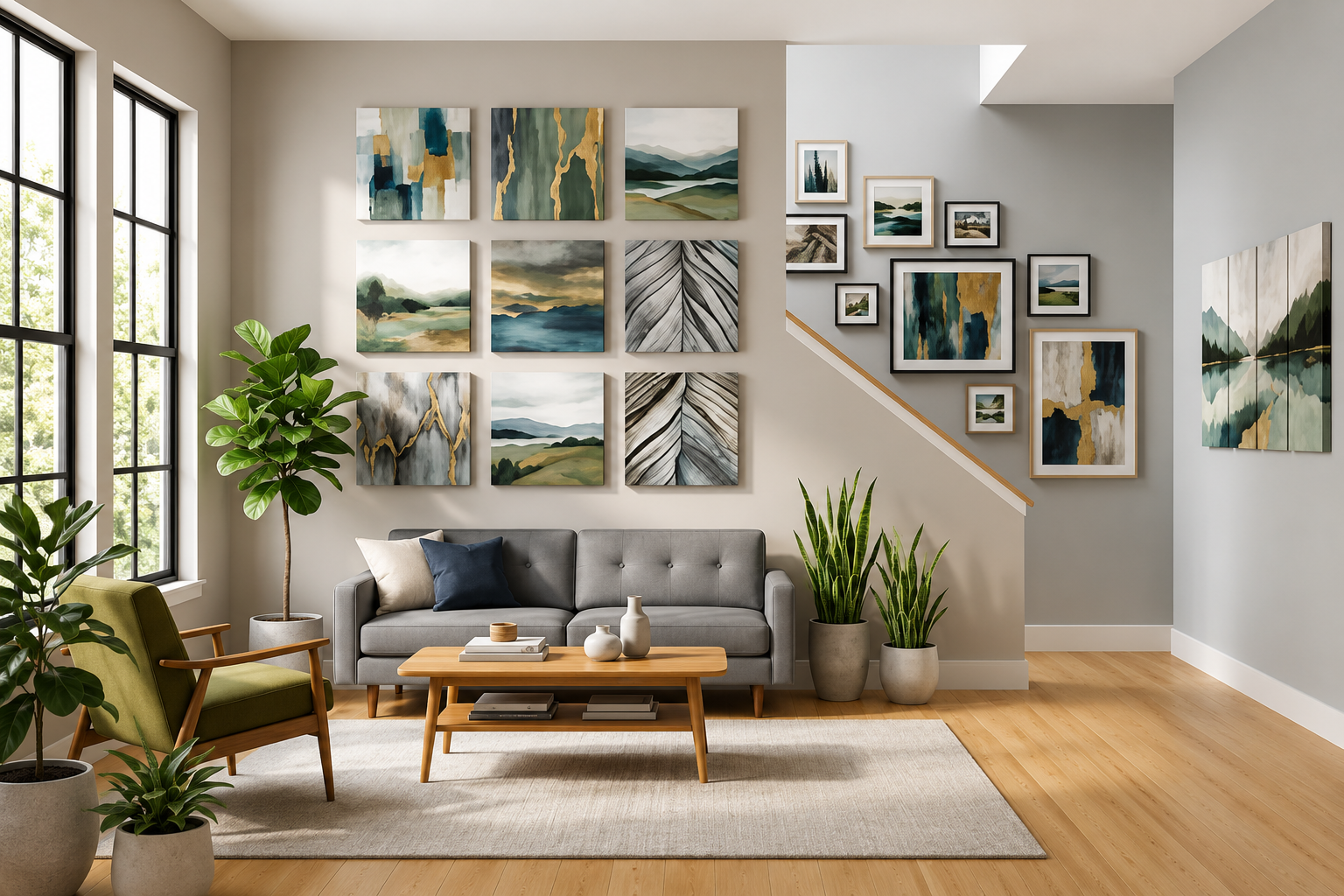
Grid layouts work beautifully in contemporary spaces where clean lines dominate. This arrangement uses identical canvas sizes hung in precise rows and columns, creating a structured, intentional, polished appearance. The key is exact spacing, typically two to four inches between each piece, maintained throughout the entire installation. Grid arrangements particularly suit series photography, matching abstract prints, or themed collections where visual consistency reinforces the overall concept. This style demands precision during installation but rewards you with a gallery that looks professionally designed.
Organic Salon-Style Layouts for a Lived-in Feel
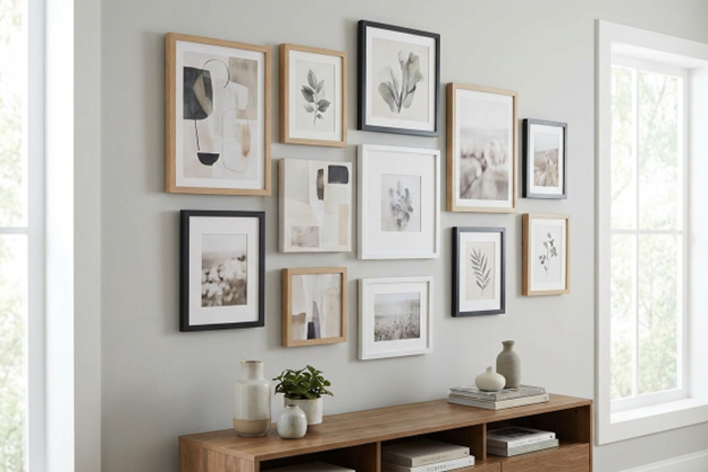
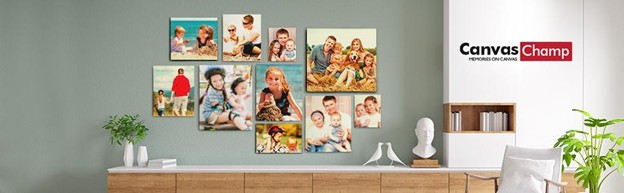
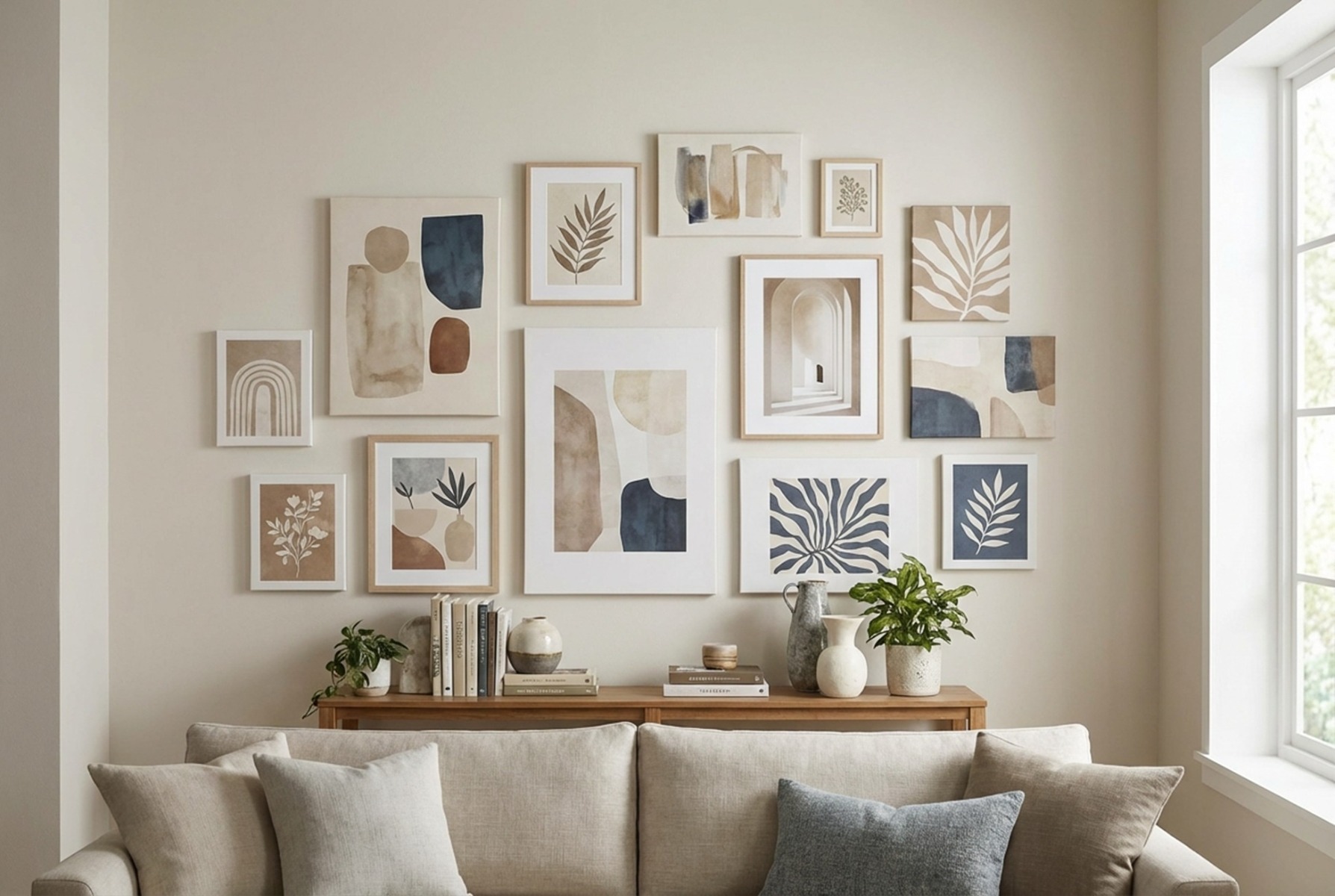
Salon-style arrangements embrace controlled chaos, mixing various canvas sizes and orientations within a defined boundary. This approach, inspired by 17th- and 18th-century European galleries, creates visual interest through variety while maintaining cohesion through shared elements like color temperature or subject matter. The organic feel suits eclectic interiors, creative spaces, and homes where collected art tells a personal story. Success with salon-style requires balancing larger statement pieces with smaller supporting canvases, ensuring no single area feels too heavy or sparse.
Choosing a Cohesive Color Palette
Color unifies even the most diverse canvas collections. Select two to three dominant colors that appear across your chosen pieces, pulling from existing room elements like throw pillows, rugs, or furniture upholstery. Monochromatic schemes using varying shades of a single color create sophisticated galleries, while complementary color pairings add energy and visual tension. Consider the wall color itself as part of your palette, as white walls showcase vibrant artwork differently than navy or sage backgrounds.
Creative Arrangement Strategies
Strategic arrangement transforms individual canvases into a unified composition. These techniques help you maximize visual impact regardless of your chosen style.
Mixing Canvas Sizes and Orientations
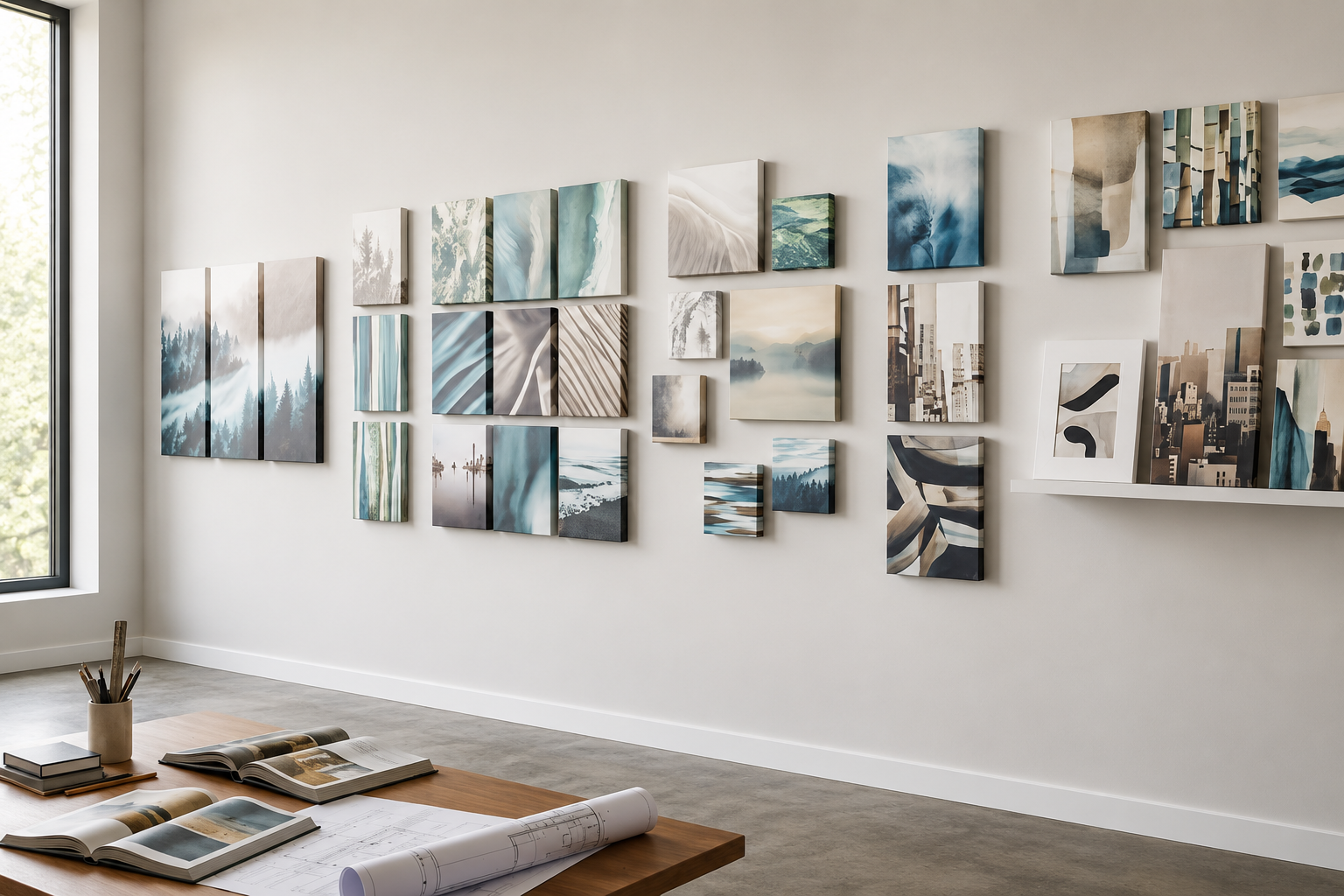
Combining different dimensions adds dynamism to your gallery wall. Pair one or two large statement pieces with medium and small supporting canvases, using the larger works to anchor the arrangement. Mixing portrait and landscape orientations prevents monotony and allows more flexible positioning. A common approach places the largest canvas slightly off-center, then builds outward with smaller pieces that balance the visual weight. This technique works especially well when you're incorporating existing artwork with new pieces from CanvasChamp, where custom sizing lets you fill specific gaps in your composition.
Incorporating Framed Canvases for Texture
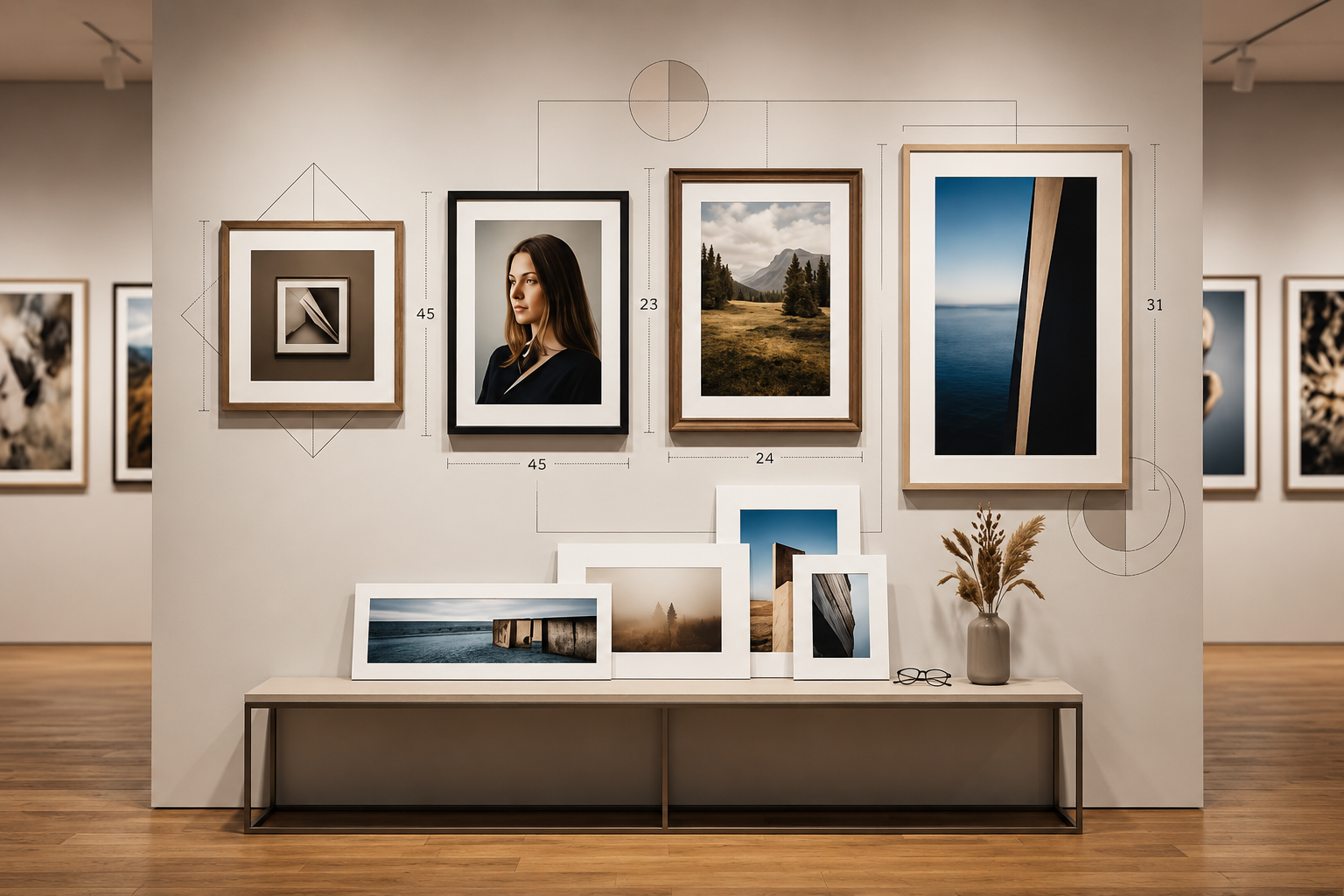
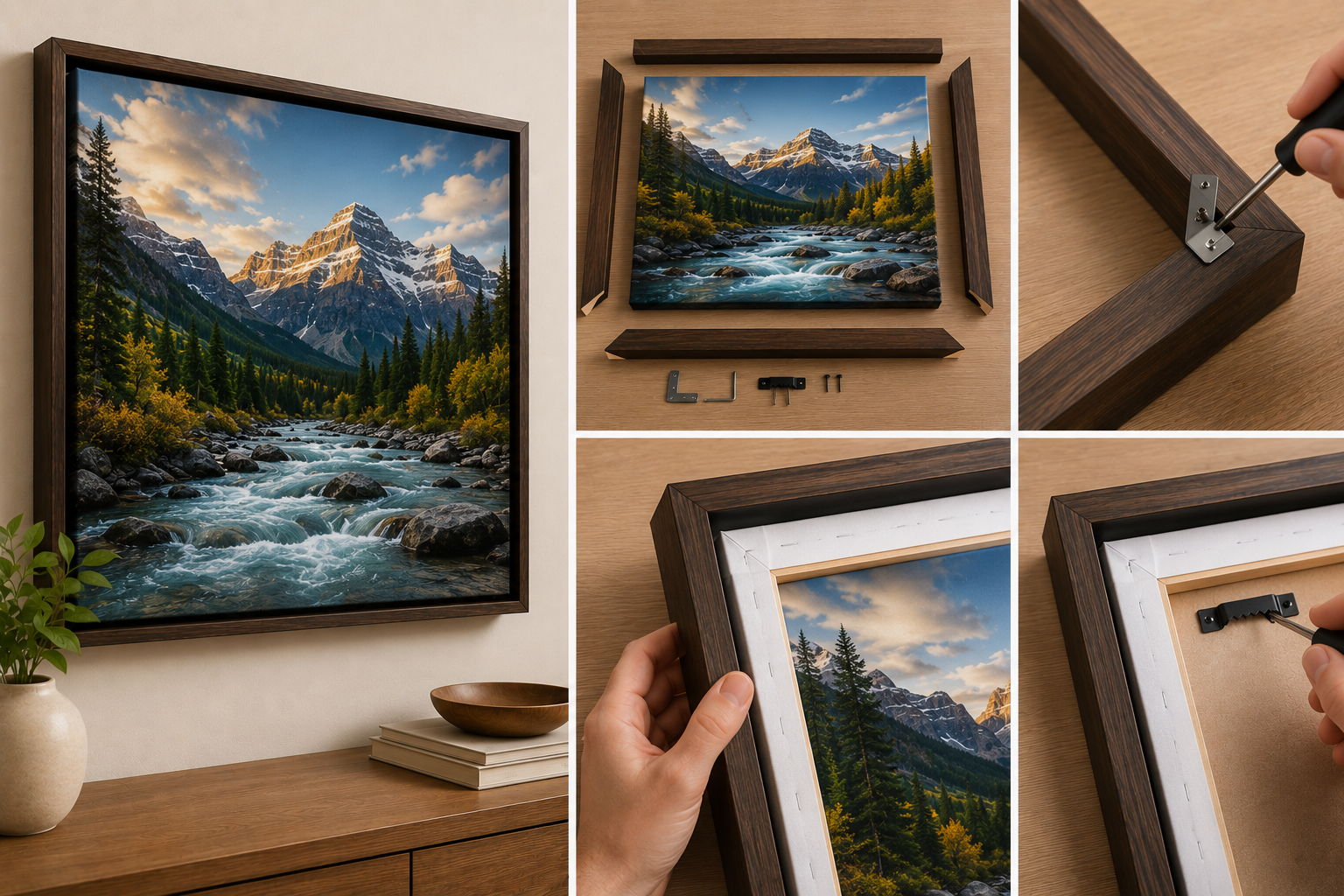
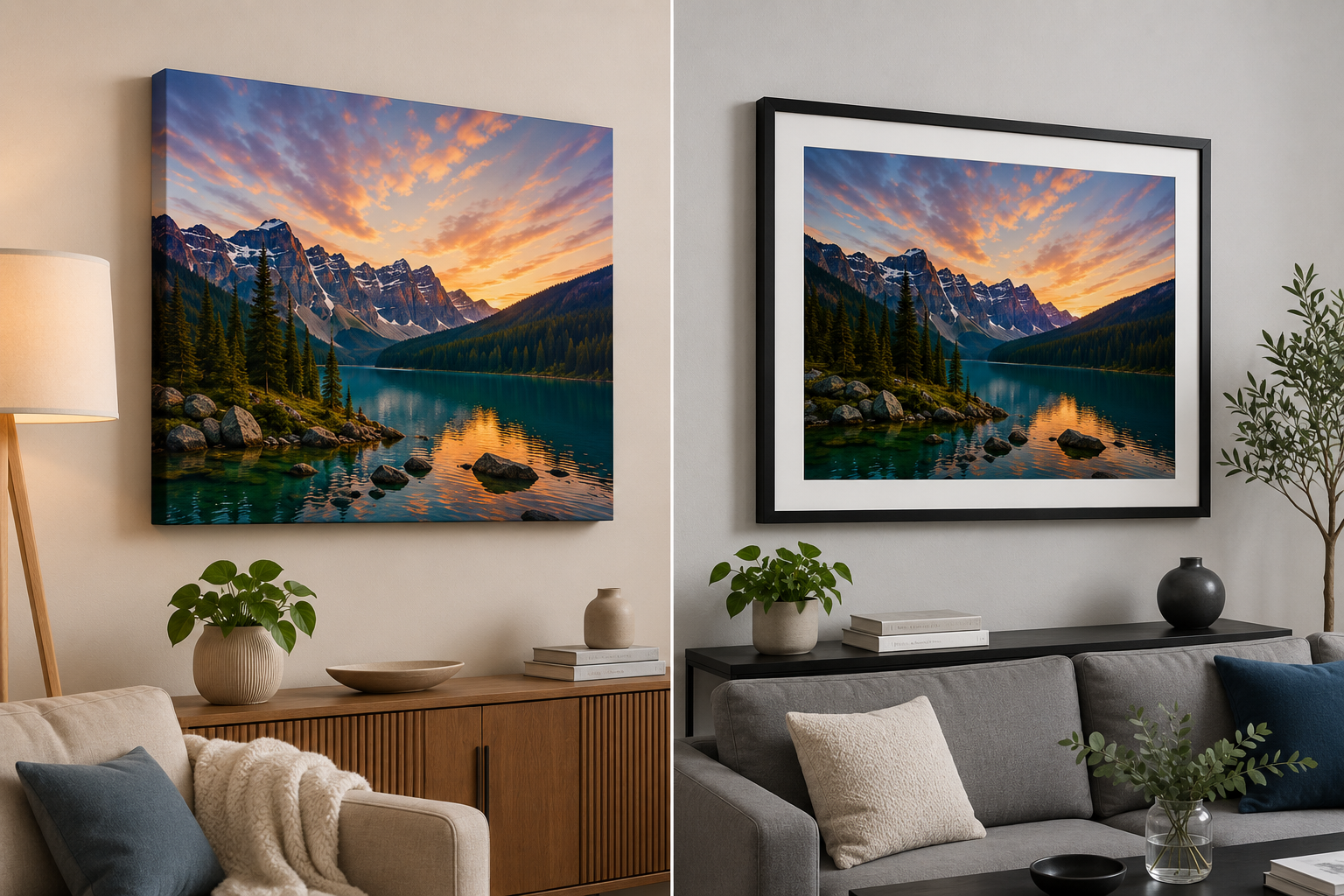
Adding framed canvases introduces dimensional variety that catches light differently throughout the day. Float frames, which create a gap between the canvas edge and frame, add contemporary sophistication. Traditional wooden or metal frames provide classic elegance. Mixing framed and unframed canvases within the same gallery creates textural interest, though limiting frame styles to two or three prevents visual clutter. Black frames read as graphic and modern, while natural wood tones warm up the overall appearance.
Using a Focal Point to Anchor the Design
Every successful gallery wall needs a visual anchor, typically your largest or most striking piece. Position this focal canvas at eye level, approximately 57 to 60 inches from the floor to its center, then build your arrangement around it. The anchor piece often sits slightly left or right of center, creating asymmetrical balance that feels more natural than perfect symmetry. Supporting pieces should complement rather than compete with your anchor, guiding the viewer's eye in a natural flow across the entire display.
Planning and Mapping Your Wall Space
Careful planning prevents unnecessary nail holes and frustration. These preparation techniques ensure your gallery wall comes together smoothly.
Creating Paper Templates for Stress-Free Hanging
Trace each canvas onto kraft paper or newspaper, cut out the shapes, and tape them to your wall before committing to any hardware. This simple step lets you experiment with arrangements, adjust spacing, and visualize the final result without damage. Mark hanging points directly on the paper templates, then transfer those marks to the wall when you're satisfied with the layout. Many designers photograph their paper mockups from across the room to evaluate the composition from a natural viewing distance.
Maintaining Consistent Spacing and Alignment
Consistent spacing creates a visual rhythm that ties individual pieces together. For grid arrangements, use a level and measuring tape to ensure precise alignment. Salon-style galleries benefit from maintaining uniform gaps between pieces, typically two to four inches, even when sizes vary dramatically. Painter's tape stretched horizontally helps align the center points of pieces at different heights. Some installers use laser levels for large gallery walls, projecting perfectly straight reference lines across the entire surface.
Curating Content and Themes
The artwork you select matters as much as how you arrange it. Thoughtful curation creates galleries that feel intentional rather than random.
Transforming Personal Photography into Art
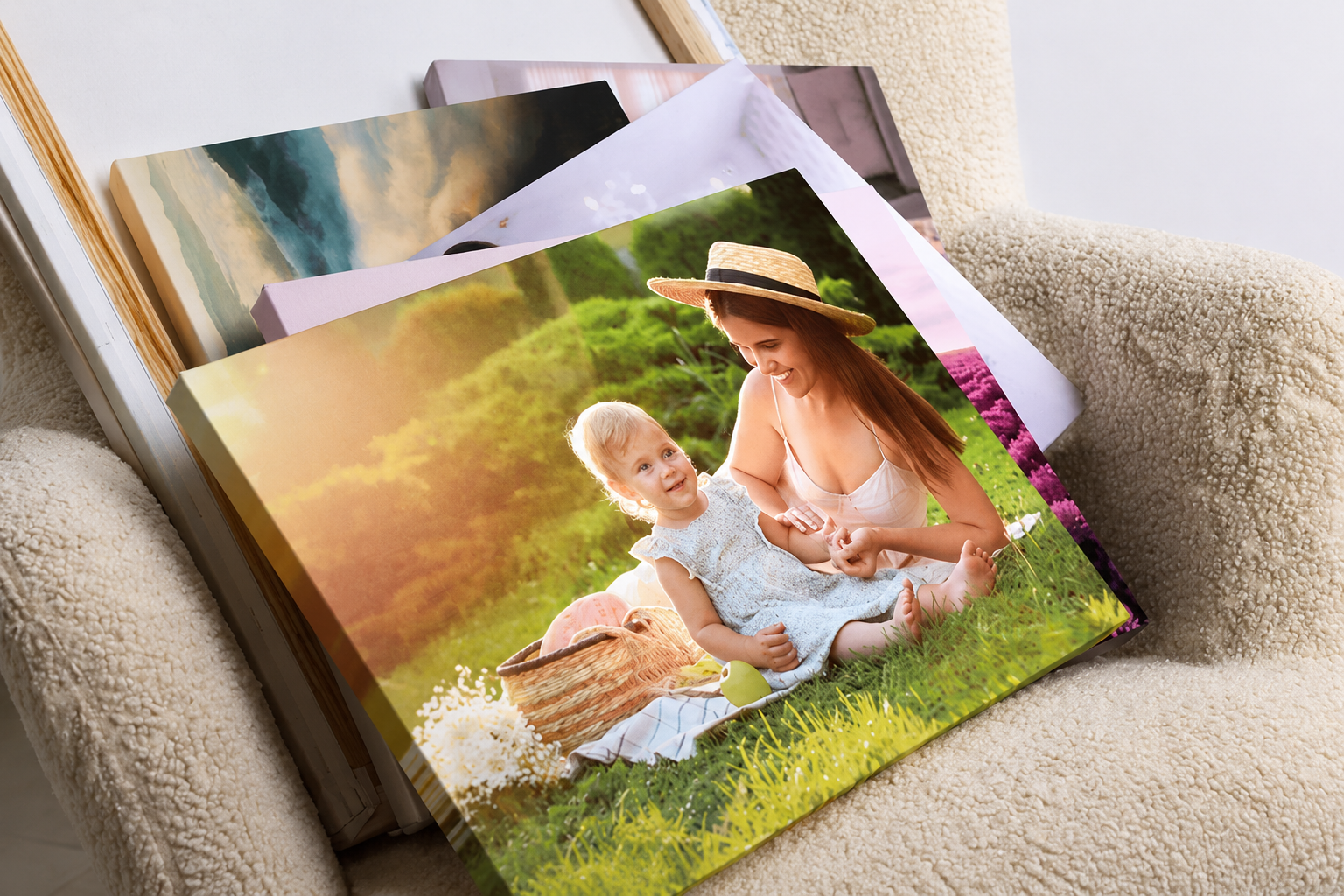
Your own photographs become gallery-worthy when printed on quality canvas. Select images with strong composition, interesting light, or emotional significance. Black and white conversions unify photos taken at different times or locations, while consistent editing presets create cohesion among color images. CanvasChamp's custom printing transforms smartphone snapshots and professional photographs alike into high-quality decorative pieces, with a range of finishes from matte to glossy.
Blending Abstract Prints with Figurative Works
Combining abstract and representational artwork adds sophistication to your gallery. Abstract pieces provide visual breathing room between detailed photographs or portraits, preventing the eye from becoming overwhelmed. Choose abstracts that share color tones with your figurative works, creating subtle connections across the arrangement. This mixing technique works particularly well in salon-style layouts where variety is already expected.
Final Touches for a Professional Finish
Small details elevate home galleries to professional standards. These finishing touches complete your curated look.
Lighting Techniques to Highlight Your Collection
Proper lighting transforms how viewers experience your gallery wall. Picture lights mounted above individual canvases provide focused illumination, while track lighting offers flexibility for larger arrangements. Avoid harsh overhead fixtures that create glare on glossy finishes. Warm white bulbs enhance skin tones in portraits and warm color palettes, while cooler temperatures suit contemporary abstract work.
Refreshing Your Gallery Wall Seasonally
Gallery walls benefit from periodic updates that keep your space feeling fresh. Rotate seasonal photographs, swap pieces between rooms, or introduce new canvases that reflect current interests. This flexibility is one advantage of canvas gallery walls over permanent art installations. Keep a rotation of pieces stored safely, ready to refresh your display when inspiration strikes.
Frequently Asked Questions
How many canvases should a gallery wall include?
Most gallery walls work best with four to nine pieces, though smaller spaces may only accommodate three to five. The key is filling your designated area without overcrowding, maintaining consistent spacing throughout.
What's the ideal height for hanging a gallery wall?
Center your arrangement at eye level, approximately 57 to 60 inches from the floor. For galleries above furniture, maintain six to eight inches between the furniture top and the lowest canvas edge.
Can I mix canvas prints with other wall art?
Absolutely. Combining canvases with framed prints, mirrors, or dimensional objects adds visual interest. Maintain cohesion through shared colors or themes across different media.
How do I prevent my gallery wall from looking cluttered?
Establish clear boundaries for your arrangement, maintain consistent spacing, and limit your color palette. When in doubt, remove pieces rather than adding more.
Creating Your Perfect Gallery Display
A well-executed canvas gallery wall transforms ordinary rooms into personal art spaces that spark conversation and showcase what matters most to you. The principles of thoughtful curation, strategic arrangement, and careful installation apply whether you're creating your first gallery or refreshing an existing display. Ready to bring your vision to life? Explore CanvasChamp's extensive canvas printing options, where premium quality meets affordable pricing, and turn your favorite images into gallery-worthy art that makes your space uniquely yours.